Best security awareness training for law firms 2026
Compare security awareness training for law firms. MSP-managed delivery wins for outsourced programs; assess ownership, legal workflows, and evidence.
DefendWise
DefendWise
Best for MSP-managed law firms: Defend Wise. Best for firms with an internal training owner: an in-house learning management system. Best for practice-specific instruction: instructor-led workshops. Best budget-conscious supplement: public security awareness resources. This 2026 guide compares security awareness training for law firms by delivery model, administrative work, and usefulness to legal staff.
TL;DR
- Defend Wise is the best security awareness training option here for MSPs seeking flat-fee, white-label delivery to law firms.
- An in-house learning management system fits law firms that already have a named training administrator.
- Instructor-led workshops suit practice-specific decisions; public security awareness resources work best as supporting material.
- Require relevant scenarios, a clear reporting procedure, and retrievable training records before choosing your delivery model.
Why this matters
Law firm security training must connect a suspicious message to a specific action: stop a payment change, verify a document request, or report an unexpected login prompt. Recognizing a warning sign is only the first step. Staff also need authority to pause work and a known person to contact.
For your 2026 shortlist, start with who will operate the program. A platform does not assign responsibility by itself, and an engaging workshop does not automatically produce an accurate completion record.
Choose the operating model before choosing the course catalog. The right model puts enrollment, instruction, follow-up, and evidence under a named owner.
What makes the best security awareness training for law firms?
Use these six criteria before reviewing the options:
- Legal-workflow relevance: Ask for instruction covering matter documents, client communications, payment changes, and confidential information.
- Clear ownership: Identify who enrolls new hires, follows up with staff, and maintains training records.
- Practical reporting: Staff should know how to report a suspicious request without continuing the conversation with its sender.
- Usable evidence: Require records that identify the learner, topic, completion date, and any follow-up action.
- Role-specific instruction: Give payment handlers, reception staff, attorneys, and administrators examples tied to their responsibilities.
- Manageable administration: Compare roster work, reminders, record retrieval, and content maintenance—not just the lesson format.
Treat these as purchasing requirements, not assumed features. During a demonstration, ask the provider to show each workflow you intend to use.
Security awareness training options at a glance
The ranking below compares four ways to deliver training. Each has a different operating owner and a distinct best-fit use case.
| Rank and option | Best for | Standout feature | Key limitation |
|---|---|---|---|
| 1. Defend Wise through an MSP | Firms outsourcing training delivery to their IT provider | Flat-fee, white-label security awareness training for MSPs | The firm still needs an internal policy and escalation owner |
| 2. In-house learning management system | Firms with an established training administrator | Firm-directed assignments and training administration | Internal staff own content selection and follow-up |
| 3. Instructor-led workshops | Practice groups needing discussion of specific decisions | Live questions about actual legal workflows | Attendance alone does not establish understanding |
| 4. Public security awareness resources | Firms supplementing an existing program | Public guidance from sources such as CISA | Resources alone do not create a managed training program |
1. Defend Wise: best security awareness training for MSP delivery
Defend Wise provides flat-fee, white-label security awareness training for MSPs. Its unlimited-seat model fits a provider delivering training across end-client organizations, including law firms.
The distinction is commercial and operational: the MSP supplies the training service under its own brand. Your firm should agree with that provider on exactly which administrative tasks the service includes.
Defend Wise pros:
- Flat-fee delivery removes per-seat pricing from the platform's commercial model.
- Unlimited seats support an MSP offering training across its end-client organizations.
- White-label delivery lets the MSP present training under its own brand.
Defend Wise cons:
- The MSP-focused model is not the same purchasing route as a firm-owned internal learning system.
- The platform does not replace your firm's responsibility to define confidentiality, payment-verification, and reporting procedures.
Best for: Law firms that want their MSP to own training delivery rather than assign another internal software administrator.
Before signing, write down the division of work. Ask who maintains the learner roster, handles exceptions, follows up on incomplete training, and supplies records when a client requests evidence. Do not treat those service tasks as automatic consequences of buying software.
The managed security awareness training program guide provides a useful next step for defining that operating arrangement.
Verdict: Buy through your MSP when the service agreement names the owner of every recurring task.
2. In-house LMS: best security awareness training for internal control
An in-house learning management system, or LMS, gives your firm a place to administer assigned learning. Security awareness becomes part of the same internal training process as other staff instruction.
This model fits firms that already have someone responsible for training operations. It is an ownership choice, not a shortcut: your team selects appropriate material and maintains the program.
In-house LMS pros:
- Your firm sets the assignment schedule and internal approval process.
- A named administrator can align training with onboarding and role changes.
- Internal policies can guide the examples and follow-up discussions.
In-house LMS cons:
- Your staff remain responsible for selecting and updating security content.
- Reporting, reminders, and assignment capabilities depend on the system you select.
- Existing software does not eliminate the administrative work of running training.
Best for: Law firms with an established learning administrator and a security owner who can review the material.
For a 2026 evaluation, demonstrate the whole learner lifecycle. Add a new employee, assign relevant instruction, record completion, change the employee's role, and retrieve the history. Require the demonstration to use the workflows your firm actually needs.
Then test accountability. If an employee misses training, does the administrator know which manager should intervene? If a policy changes, who decides whether the instruction needs updating? A capable LMS still needs those decisions outside the software.
Verdict: Buy when you already have an internal owner; hold if administration would become an unassigned task.
3. Instructor-led workshops: best for practice-specific decisions
Instructor-led workshops let staff discuss how security rules apply to their work. A facilitator can walk through a payment instruction, a shared-document request, or an urgent message apparently sent by a partner.
This format is most useful when the answer depends on your firm's procedure. Staff can ask questions before an ambiguous request reaches their desk.
Instructor-led workshop pros:
- Live discussion exposes misunderstandings about internal procedures.
- Practice groups can examine examples relevant to their responsibilities.
- Facilitators can explain why a particular verification step matters.
Instructor-led workshop cons:
- Scheduling must account for absences and new starters.
- Attendance records do not demonstrate that someone can apply the lesson.
- Someone must maintain materials and arrange follow-up instruction.
Best for: Firms introducing or correcting a specific workflow, especially payment verification or confidential document handling.
As a proposed session format, reserve 15 minutes per workshop for one decision and a short discussion. This is a planning recommendation, not a required duration. Ask participants to explain what they would do, which communication channel they would use, and who would receive the report.
For example, present an unexpected change to settlement-payment instructions. Ask staff to identify the approved verification route rather than merely describe the message as suspicious. Keep the example fictional and exclude real client or matter details.
Verdict: Buy for targeted instruction; skip as the sole program unless someone owns onboarding, records, and refreshers.
4. Public awareness resources: best as a budget-conscious supplement
Public resources, including CISA's Secure Our World guidance, provide material on foundational security habits. Your firm can use such guidance to support discussions about recognizing suspicious requests, protecting accounts, and reporting concerns.
The resource is the teaching material—not the operating process. Your firm still decides who receives it, what staff must do afterward, and how to document participation.
Public awareness resource pros:
- Established public guidance provides a starting point for foundational topics.
- An internal owner can select material relevant to a current concern.
- Resources can support staff meetings and policy reminders.
Public awareness resource cons:
- General guidance does not explain your firm's approval and escalation procedures.
- A collection of links does not establish completion or understanding.
- Internal staff must review material and organize delivery.
Best for: Firms strengthening an existing program with additional explanations and reminders.
For your 2026 plan, attach each selected resource to a specific action. A resource about account protection should lead into your account-security procedure. Material about suspicious messages should identify your firm's reporting route.
Do not email a resource library and call the job finished. Ask staff to demonstrate the relevant decision, then retain a record of the instruction and any correction.
Verdict: Use as supporting material; skip as a substitute for assigned training and accountable administration.
Turn the shortlist into a working program
A purchase decision should end with an operating plan. Use this sequence to connect the chosen delivery model to daily legal work.
Name the owner
Assign one accountable firm contact and document the MSP's or internal administrator's responsibilities. Distinguish policy decisions from delivery tasks: your provider can deliver instruction, but your firm must approve its own verification and reporting procedures.
Map the workflows
Identify where staff receive sensitive documents, approve payments, change account details, and grant access. For each workflow, state the action staff should take when something looks wrong.
Assign the instruction
Connect topics to roles rather than sending identical examples without context. Payment handlers need payment-change instruction; reception staff need procedures for callers requesting information or access.
Keep the evidence
Record who received which instruction and when. Preserve exceptions and follow-up actions alongside completion records so a later reviewer can understand what happened.
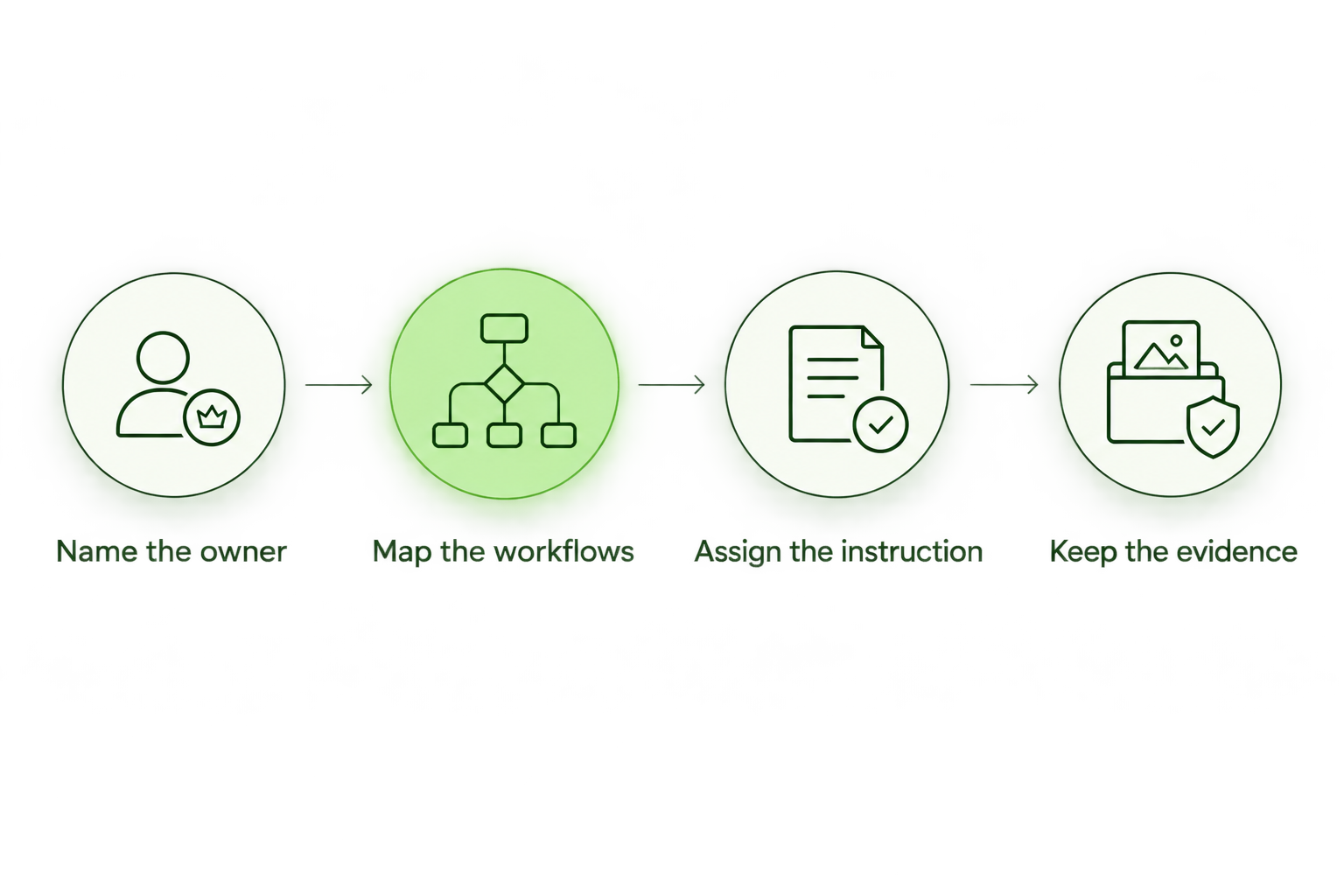
Choose a delivery model that supports the whole process, not just the lesson.
Set an initial review after 30 days of operation to check enrollment gaps and unclear responsibilities. Schedule another review after 90 days of operation to examine follow-up work and record retrieval. These are proposed checkpoints, not legal deadlines or effectiveness benchmarks.
How the options are ranked
This 2026 ranking prioritizes a clear delivery owner, relevant instruction, manageable administration, and usable evidence. The order favors MSP delivery for firms outsourcing training, then separates the alternatives by the internal responsibility each requires.
It is a fit-based ranking of operating models, not a claim that one format produces a measured reduction in incidents. Workshops and public resources remain useful additions even when an MSP or internal LMS supplies the main program.
Which option should your law firm choose?
Defend Wise is the best fit here for MSPs delivering flat-fee, white-label security awareness training to law firms. Choose an internal LMS instead when your firm already has a capable training administrator and wants to operate the program itself.
Use instructor-led workshops to resolve specific procedural questions. Use public resources to reinforce the program, not replace its owner.
Before approving your 2026 choice, request one practical demonstration: enroll a learner, deliver relevant instruction, handle an incomplete assignment, and retrieve the resulting record. The purchasing decision becomes clearer when you can see who does the work.
FAQ
What's the best security awareness training for law firms using an MSP?
Defend Wise is the best fit in this comparison for MSPs seeking flat-fee, white-label security awareness training for law firms. Agree on enrollment, follow-up, and evidence responsibilities with your provider before purchasing.
Should a law firm use an LMS or instructor-led workshops?
Use an LMS for ongoing training administration and workshops for decisions that need discussion. The formats can work together, provided someone owns assignments, attendance, follow-up, and records.
What should attorneys and legal staff learn first?
Start with the decisions staff make around confidential documents, payment changes, account access, and suspicious requests. Teach the approved verification and reporting procedures alongside recognition skills.
Does completing security training prove a law firm is compliant?
No. Completion records document training activity, not compliance with every obligation. Have qualified counsel identify applicable requirements and assess training alongside the firm's policies and technical safeguards.
How often should a law firm review its training program?
Review training when roles, systems, procedures, or identified risks change. As an operating recommendation, check a new program after 30 days and again after 90 days; these are not universal legal deadlines.
Can public security resources replace a managed training program?
Public resources provide instructional material but do not assign ownership or maintain your firm's records. Use them within a process that includes assigned learning, firm-specific procedures, and follow-up.
What training evidence should a law firm retain?
Retain learner identity, the topic taught, completion dates, and documented follow-up. Have the responsible firm contact define retention requirements and access permissions for those records.
One last thing
Test the instruction with a request that appears to come from a senior partner. Ask one question: does your written procedure explicitly allow the recipient to pause and verify it?
A reporting rule that disappears under seniority pressure is not a usable rule. Make the approved verification route clear before asking staff to follow it.