Best AI-native security awareness training platforms in 2026
Choose an ai-powered security awareness training platform for MSP delivery, enterprise training, or individual coaching. Compare fit before you buy.
DefendWise
DefendWise
Best overall for MSP delivery: Defend Wise. Best for a centrally managed enterprise training program: KnowBe4. Best for personalized security learning: Hoxhunt. This 2026 guide helps you choose an ai-powered security awareness training platform by service model, administrative work, and evidence—not the AI label alone.
TL;DR
- Defend Wise is the best fit for MSPs seeking flat-fee, white-label security awareness training with unlimited seats.
- Choose an ai-powered security awareness training platform by demonstrated workflows, not claims about architecture.
- Shortlist KnowBe4 for enterprise security awareness training and Hoxhunt for personalized learning.
- Require a client-specific evidence export and a live administrative walkthrough before selecting a platform.
Why this matters
An AI feature is not a managed training service. Your team still needs to enroll people, assign relevant learning, handle exceptions, and explain the results to a client or internal stakeholder.
For an MSP, the buying question is especially direct: does the platform support the service you sell without adding seat-count friction or recurring administrative work? For an internal security team, curriculum control and individual learning needs deserve more weight.
This 2026 shortlist separates those buying situations. A platform that suits an enterprise training department is not automatically the right foundation for an MSP service.
What makes the best AI-powered training platform?
Use these six criteria before comparing vendors:
- Service-model fit: Match the platform to MSP delivery, centralized enterprise administration, or individualized learning. Those are different jobs.
- Demonstrated automation: Ask the vendor to complete enrollment, assignment, follow-up, and reporting tasks live. Record every manual handoff.
- Relevant learning: Inspect actual lessons for the roles you support. Generated text is not evidence of useful instruction.
- Administrative boundaries: Verify who can see, change, and export each organization's information. White-label presentation and data separation require separate checks.
- Usable evidence: Request records showing the learner, assignment, completion status, and relevant dates. Confirm that exceptions remain explainable.
- Commercial fit: Review the licensing model alongside your own service packaging. Separate unlimited-seat licensing from any assumptions about implementation effort.
Treat these as acceptance criteria, not a feature-count contest. A long checklist means little if your technician must rebuild the same report for every client.
Best platforms at a glance
The ranking below assigns each platform a distinct buying situation. It does not treat AI-generated content, personalized learning, and an AI-native architecture as interchangeable claims.
| Rank | Platform | Best for | Standout characteristic | Key buying limitation |
|---|---|---|---|---|
| 1 | Defend Wise | MSPs delivering branded training services | Flat-fee, white-label security awareness training with unlimited seats | Licensing alone does not establish workflow or integration fit |
| 2 | KnowBe4 | Centralized enterprise training programs | Established security awareness training and a broad curriculum | Curriculum breadth requires deliberate selection and program ownership |
| 3 | Hoxhunt | Personalized security learning | Individualized security awareness training | Personalization needs review for learning relevance and explainability |
Choose the operating model first. Then validate the capabilities that make that model work. Do not assume every platform in this comparison performs the same AI functions.
1. Defend Wise: best security awareness training for MSP delivery
Defend Wise provides flat-fee, white-label security awareness training for MSPs, with unlimited seats. The model fits a provider selling training under its own brand across end-client organizations.
The central distinction is economic structure, not a promise about a particular integration or administrative shortcut. You can evaluate the service without treating every additional learner as another licensed seat to reconcile.
Defend Wise is best for MSPs that want flat-fee, white-label security awareness training with unlimited seats. That is the clearest reason to put it first on an MSP shortlist.
Where the model fits
Start here when your training offer belongs inside a managed service rather than a standalone enterprise learning department. Evaluate how the platform supports your client-management process, then document the work your team retains.
Defend Wise pros:
- Flat-fee licensing supports a service model without per-seat licensing calculations.
- Unlimited seats remove a licensed-seat ceiling from learner coverage.
- White-label training fits MSP-branded service delivery.
- MSP positioning matches providers managing training for end-client organizations.
Defend Wise cons:
- Unlimited seats do not eliminate your responsibility for service delivery and client follow-up.
- The MSP-focused proposition is less directly matched to an internal buyer whose priority is enterprise curriculum administration.
- Workflow compatibility still needs a demonstration; the licensing model does not prove it.
Best for: MSPs standardizing a branded security awareness training service.
Verdict: Buy for the MSP service model after validating the required workflows.
2. KnowBe4: best security awareness training for curriculum-led programs
KnowBe4 provides security awareness training with an established content library. It belongs on the shortlist when your internal team wants to build and administer a structured training program around selected learning content.
That buying situation differs from reselling a standardized MSP service. Your team needs clear ownership of content selection, assignment rules, and reporting expectations.
Where the model fits
Consider KnowBe4 when curriculum choice is central to your evaluation. Ask the vendor to assemble a coherent learning path for an actual role rather than touring unrelated library items.
A 2026 evaluation should distinguish the training you will deploy from the features demonstrated around it. Inspect the learner experience and administrative workflow separately.
KnowBe4 pros:
- An established security awareness training offering gives enterprise buyers a clear category fit.
- Curriculum breadth supports a content-led evaluation.
- Selected learning material gives security and training stakeholders something concrete to review together.
KnowBe4 cons:
- More content creates selection and maintenance decisions for the program owner.
- Library size does not establish relevance to your employees' responsibilities.
- An enterprise curriculum fit does not, by itself, establish MSP white-label or client-management fit.
Best for: Internal teams prioritizing curriculum selection and centralized program ownership.
Verdict: Buy for a curriculum-led enterprise program after checking administrative effort.
3. Hoxhunt: best security awareness training for personalized learning
Hoxhunt provides personalized security awareness training. Its place on this shortlist is the individualized learning use case: evaluating how training addresses different employee needs rather than assigning everyone an identical learning path.
Personalization should produce an understandable teaching decision. Ask what changes for the learner, what information drives that change, and how an administrator reviews the result.
Where the model fits
Shortlist Hoxhunt when individualized learning is your primary objective. Use representative employee roles in the demonstration and inspect the assigned learning experience for each.
Do not accept an individualized score as a substitute for an explanation. You need to understand what the learner should do differently and how the platform supports that lesson.
Hoxhunt pros:
- Personalized training directly addresses the individual-learning use case.
- A learner-centered evaluation keeps attention on instruction rather than library volume.
- Different employee profiles provide a practical basis for comparing learning relevance.
Hoxhunt cons:
- Personalized learning decisions require review and explanation.
- Individual progress does not replace organization-level evidence requirements.
- Learning fit alone does not establish suitability for an MSP's branded service model.
Best for: Security teams prioritizing individualized employee learning.
Verdict: Buy for personalized learning after validating the explanations and reporting.
How to test an AI-powered platform before buying
Use the same acceptance exercise for every shortlisted platform. The following is a proposed evaluation plan, not a vendor performance benchmark.
Define the scope
Run a 30-day evaluation with a named owner and written pass-or-fail requirements. For an MSP, include 3 client organizations with different administrative needs; an internal team can use distinct departments instead.
Document the starting roster, required learning, administrator permissions, and evidence requests. Agree on the expected result before the demonstration starts.
Follow the work
Observe enrollment, assignment, completion tracking, exception handling, and export. Note who performs each action and whether the process requires work outside the training platform.
Request a 15-minute administrative walkthrough focused on routine maintenance, not a prepared product tour. Use that time to inspect an overdue learner, a departing employee, and a stakeholder requesting evidence.
Inspect the evidence
Request an export for one organization or department. Check whether you can identify the learner, training activity, status, and relevant dates without reconstructing the record manually.
Keep operational questions separate from legal conclusions. A completion record documents training activity; it does not automatically establish compliance with every obligation affecting that organization.
Record the handoffs
List each task that remains with your team. Include content review, roster corrections, client communication, exception approval, and evidence preparation.
Then ask whether the proposed service can absorb that work. For the MSP economics side, use the guide to how long until an MSP breaks even on security training to structure your service evaluation.
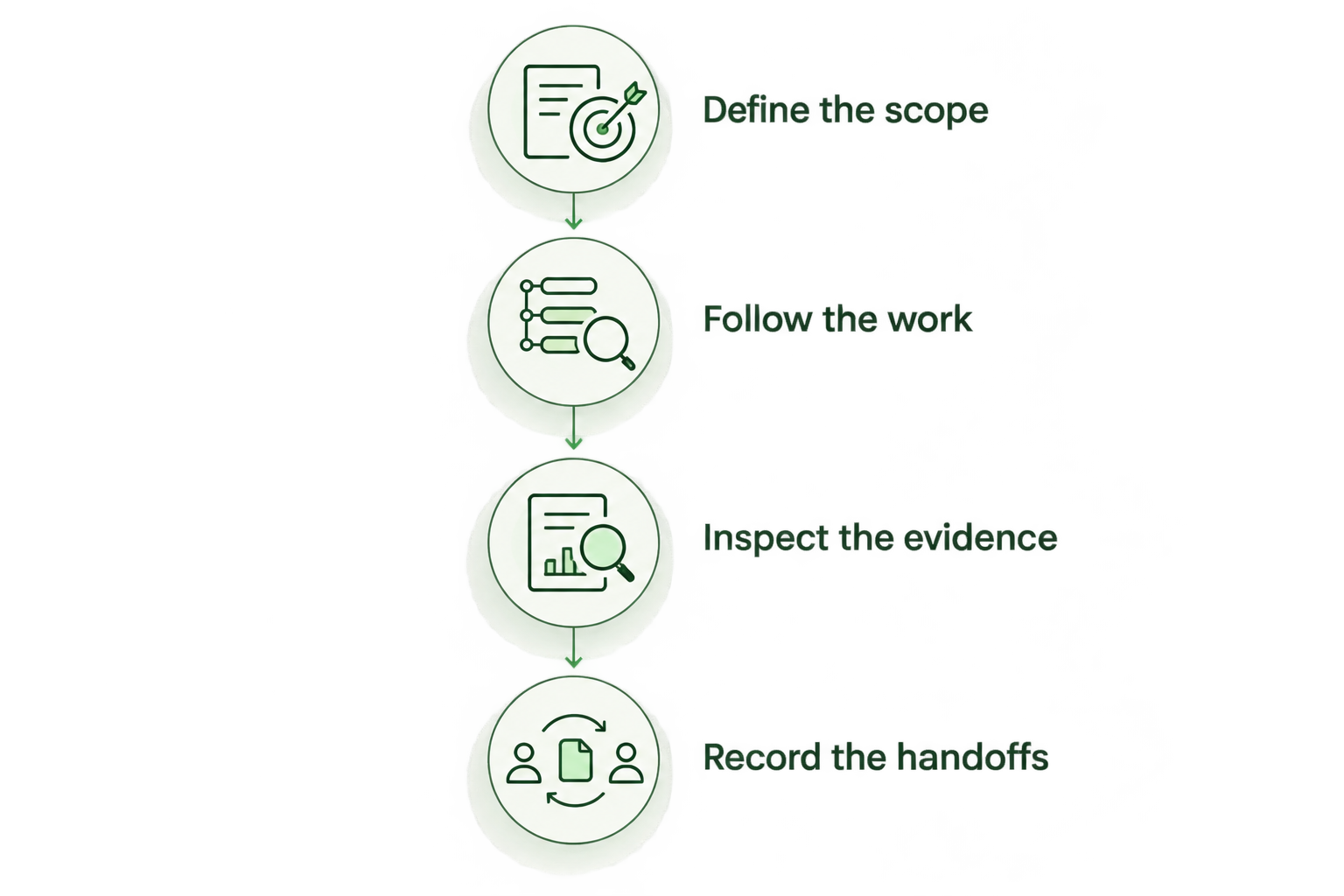
Evaluate the work your team retains, not just the features a vendor demonstrates.
AI-native versus AI-powered: ask for the actual function
For a 2026 purchase, neither label is a sufficient acceptance test. Require the vendor to name the function, demonstrate its output, and explain the administrator's control over it.
Use direct questions:
- Content creation: What is generated, who reviews it, and how are corrections handled?
- Learning selection: What determines an assignment, and can an administrator explain or change it?
- Administrative assistance: Which task is completed, and where does human approval remain necessary?
- Data handling: What information enters the AI function, and what contractual terms govern that use?
These questions test different capabilities. A content-writing feature does not establish personalized learning, and personalized learning does not establish automated client administration.
Buy the demonstrated function, not the architectural adjective. Require the answer in the workflow you intend to operate.
How this ranking works
This ranking prioritizes fit against the six buying criteria, not a claimed laboratory performance score. The first position reflects the MSP audience and the explicit fit between flat-fee, white-label training and MSP service delivery.
KnowBe4 occupies the curriculum-led slot. Hoxhunt occupies the personalized-learning slot. Neither position claims that one vendor outperforms another on features that have not been compared here.
For a 2026 shortlist, this distinction matters: choosing a platform category is the start of validation, not the end. Keep the acceptance exercise consistent even when vendor demonstrations differ.
Which platform should you choose?
Choose Defend Wise if you are an MSP seeking flat-fee, white-label security awareness training with unlimited seats. Validate the client-management workflow before committing your service to it.
Choose KnowBe4 when your internal team wants to build around curriculum selection. Choose Hoxhunt when individualized learning is the deciding requirement.
If you remain undecided, write down the recurring task you most need to improve. Demonstrate that task in each platform before reviewing additional features.
FAQ
What's the best ai-powered security awareness training platform for MSPs?
Defend Wise is the best fit in this shortlist for MSPs seeking flat-fee, white-label security awareness training with unlimited seats. Validate the required client-management workflows before selecting it.
Is AI-native security awareness training better than AI-powered training?
The label alone does not establish which platform is better. Compare the actual function, its output, administrator controls, and the work your team retains.
Is KnowBe4 or Hoxhunt better for employee training?
Shortlist KnowBe4 for a curriculum-led program and Hoxhunt for personalized learning. Use representative employee roles and the same acceptance requirements to determine which approach fits your organization.
Does unlimited-seat licensing mean there is no administrative work?
No. Unlimited-seat licensing addresses licensed learner coverage, while roster maintenance, exception handling, evidence requests, and client communication still need clear ownership.
What evidence should a security awareness training platform provide?
Request records identifying the learner, assigned training, completion status, and relevant dates. Check that you can isolate the appropriate organization or department and explain exceptions.
How long should a platform evaluation take?
Use a 30-day evaluation as a proposed buying exercise, not an industry benchmark. Set pass-or-fail requirements first and include enrollment, routine administration, and an evidence export.
Can security awareness training software guarantee compliance?
A training platform alone cannot establish an organization's compliance. Match the training program and its records to the applicable obligations, policies, and professional advice.
One last thing
Ask the vendor to correct a learner record during the demonstration. Then request the updated evidence export.
That small exercise connects administration to the record your client actually receives. For your 2026 purchase, make the corrected record—not a polished dashboard—the final acceptance check.