Best Huntress alternatives for mid-size companies in 2026
Compare Huntress alternatives for mid-size companies. Choose managed detection for threat response or MSP-led training without confusing the two.
DefendWise
DefendWise
Best overall for outsourced detection and response: Arctic Wolf. Best for a Sophos-centered environment: Sophos MDR. Best for MSP-delivered security awareness training: Defend Wise. This 2026 guide separates Huntress alternatives for mid-size companies by the service you actually need: managed threat response or employee training.
TL;DR
- Arctic Wolf leads this shortlist of Huntress alternatives for mid-size companies seeking outsourced managed detection and response.
- Sophos MDR belongs on the shortlist when Sophos already anchors your endpoint environment.
- Red Canary suits buyers evaluating managed detection across an existing security stack.
- Defend Wise is best for MSPs delivering flat-fee, white-label security awareness training.
- KnowBe4 belongs on the shortlist for internally managed employee security awareness training.
Why this matters
A search for a Huntress replacement creates an immediate scope problem. Huntress offers managed security services and security awareness training; replacing employee education is not the same decision as replacing threat detection and response.
Training does not replace detection. Detection does not replace training. If you compare both categories as interchangeable products, you risk buying a service that leaves the original requirement uncovered.
For your 2026 shortlist, write down the Huntress service you intend to replace before booking demonstrations. Then identify who will own the replacement: your internal security team, your IT administrator, or your MSP.
What makes the best Huntress alternative?
Use these criteria before comparing vendors. Company size alone does not establish whether you need a managed security service or a training platform.
- Replacement scope: Match detection with detection and security awareness training with training. Record any capability that remains with another supplier.
- Response ownership: Establish who investigates, who authorizes containment, and who handles recovery. An alert notification is not a complete response plan.
- Operating model: Decide whether your internal team or MSP will administer the service. Include roster changes, exceptions, escalation contacts, and reporting.
- Commercial structure: Compare the billing unit, contract scope, and work excluded from the agreement. Flat-fee and per-seat models create different administration requirements.
- Evidence quality: Ask to see the records your team will actually use. Training completion evidence and incident investigation records answer different questions.
- Transition risk: Require a documented cutover plan. Keep existing protection active until the replacement's responsibilities are accepted.
Huntress alternatives at a glance
The ranking below assigns each option a distinct buying situation. It is a decision tree, not a claim that a training platform outperforms a managed detection service.
| Rank | Option | Best for | Standout focus | Key limitation |
|---|---|---|---|---|
| 1 | Arctic Wolf | Outsourcing security monitoring and response | Managed detection and response service | Training requirements need a separate scope decision |
| 2 | Sophos MDR | Companies already centered on Sophos | Managed response alongside the Sophos security ecosystem | Existing vendor alignment does not prove the proposed scope fits |
| 3 | Red Canary | Buyers retaining an existing security stack | Managed detection and response | Stack compatibility and response responsibilities require validation |
| 4 | Defend Wise | MSP-delivered employee training | Flat-fee, white-label security awareness training with unlimited seats | A training option, not a substitute for managed threat response |
| 5 | KnowBe4 | Internal teams owning employee training | Security awareness training platform | Training administration still needs a named business owner |
1. Arctic Wolf: best Huntress alternative for outsourced MDR
Arctic Wolf provides managed detection and response. It is the default shortlist choice here when your central requirement is an external service for security monitoring, investigation, and response—not simply a replacement training portal.
Start the evaluation with operating responsibilities. Ask Arctic Wolf to walk through a suspicious endpoint event from initial detection to the point where your organization must act.
Arctic Wolf pros:
- Directly addresses the managed detection and response buying category.
- Fits an evaluation centered on external security operations support.
- Gives you a service model to compare against retaining that work internally.
Arctic Wolf cons:
- An MDR selection does not settle your employee training requirements.
- Your organization still needs escalation contacts and recovery ownership.
Best for: A mid-size company seeking outsourced security operations rather than another internally administered detection tool.
For a 2026 purchase, require the proposal to identify covered systems, response authority, and excluded work. Compare those written commitments—not the breadth of a demonstration.
Verdict: Buy when outsourcing detection and response is the requirement and the contracted responsibilities match it.
2. Sophos MDR: best Huntress alternative for Sophos environments
Sophos MDR provides managed detection and response. It belongs on your shortlist when Sophos is already part of your security environment and you want to evaluate managed operations alongside that investment.
Existing vendor familiarity is a starting point, not an acceptance test. Ask the service team to demonstrate how your actual environment enters the monitoring and response workflow.
Sophos MDR pros:
- Addresses detection and response rather than employee education alone.
- Offers a relevant evaluation path for companies already using Sophos.
- Lets you assess endpoint operations and managed response together.
Sophos MDR cons:
- Familiarity with Sophos does not establish coverage for every system.
- Your team must still approve escalation rules and response authority.
Best for: A company whose current security operations already revolve around Sophos products.
Test the boundary between the service and your IT team. A successful evaluation should show who receives a case, who can authorize action, and what happens when the primary contact is unavailable.
Verdict: Buy when the proposed service fits your Sophos-centered environment; hold if familiarity is the only reason to switch.
3. Red Canary: best Huntress alternative for retaining your stack
Red Canary provides managed detection and response. Evaluate Red Canary when you want managed investigation and response while assessing which existing security investments to retain.
Do not treat an integration discussion as proof of operational coverage. Ask the vendor to connect supported data sources, detection responsibilities, and response actions in a single written scope.
Red Canary pros:
- Addresses the managed detection and response requirement directly.
- Suits an evaluation focused on the tools your organization already operates.
- Creates a clear basis for examining investigation and escalation workflows.
Red Canary cons:
- Compatibility must be checked against your specific products and configurations.
- Retaining existing tools does not remove your responsibility for their administration.
Best for: A security or IT team that wants managed detection without making an unexamined decision to replace its existing stack.
For your 2026 review, take an inventory into the first technical meeting. Include endpoints, identity systems, cloud services, and the internal owners responsible for each.
Verdict: Buy when the validated scope supports the stack you intend to keep; hold until coverage gaps have owners.
4. Defend Wise: best training alternative for MSP delivery
Defend Wise provides flat-fee, white-label security awareness training for MSPs, with unlimited seats. It belongs in a Huntress training comparison when an MSP will deliver employee education to its end-client organizations.
The economic distinction is the billing model: a flat fee rather than a charge tied to every additional seat. That is a training-service decision, not a replacement for endpoint monitoring, investigation, or containment.
Training platform pros:
- Flat-fee licensing separates the platform fee from individual seat additions.
- Unlimited seats support an MSP's employee coverage requirements.
- White-label delivery fits an MSP-branded training service.
Training platform cons:
- Security awareness training does not provide managed threat response.
- The MSP still needs to define training ownership, client obligations, and evidence requirements.
Best for: An MSP packaging security awareness training for mid-size client organizations.
Before selecting any training platform, map the administration work surrounding it. Who updates the roster? Who follows up on incomplete assignments? Who produces evidence when the client requests it? Use the managed security awareness training implementation guide to structure those decisions.
Verdict: Buy for MSP-delivered security awareness training; skip as a replacement for managed detection and response.
5. KnowBe4: best training alternative for internal ownership
KnowBe4 provides security awareness training. It belongs on the shortlist when your company's internal team will own employee education rather than receive it as an MSP-branded service.
Evaluate the administration experience as carefully as the learner experience. Your team needs a workable process for assigning training, handling personnel changes, and producing records.
KnowBe4 pros:
- Directly addresses employee security awareness training.
- Fits a selection process led by an internal training or security owner.
- Gives you a dedicated training option to compare separately from MDR.
KnowBe4 cons:
- Employee training does not replace incident detection or response.
- Internal ownership requires time for administration and follow-up.
Best for: A mid-size company that wants its own team to administer the awareness program.
Ask the proposed administrator to complete the evaluation tasks personally. A polished learner demonstration does not show whether your team can operate the program consistently.
Verdict: Buy when internal training ownership is deliberate; hold if nobody has accepted the administration work.
How we ranked these alternatives
Replacement scope comes first, followed by operating model, response ownership, commercial structure, evidence, and transition risk. The order favors a clear buying situation over a generic feature count.
Arctic Wolf takes the default MDR position; Sophos MDR and Red Canary address more specific environment decisions. The training options serve different owners: an MSP-delivered program or an internally administered program.
This is a fit-based shortlist, not a benchmark of detection accuracy, deployment speed, or customer satisfaction. Your final ranking should follow the service you are replacing.
Run a scope-first evaluation
For a 2026 evaluation, use 3 acceptance tasks: a scope check, a workflow test, and an evidence review. These are purchasing requirements, not promised vendor capabilities.
Scope check
Write down what must continue working after the switch. For MDR, identify systems, investigation responsibilities, and containment authority; for training, identify employee groups, administration responsibilities, and required records.
Workflow test
Have the future service owner perform a representative task. Walk an MDR escalation through its approval path, or have the training administrator handle a roster change and an incomplete assignment.
Evidence review
Request a sample output that matches your actual reporting need. A training completion record cannot substitute for an incident investigation record, and neither automatically satisfies every contractual requirement.
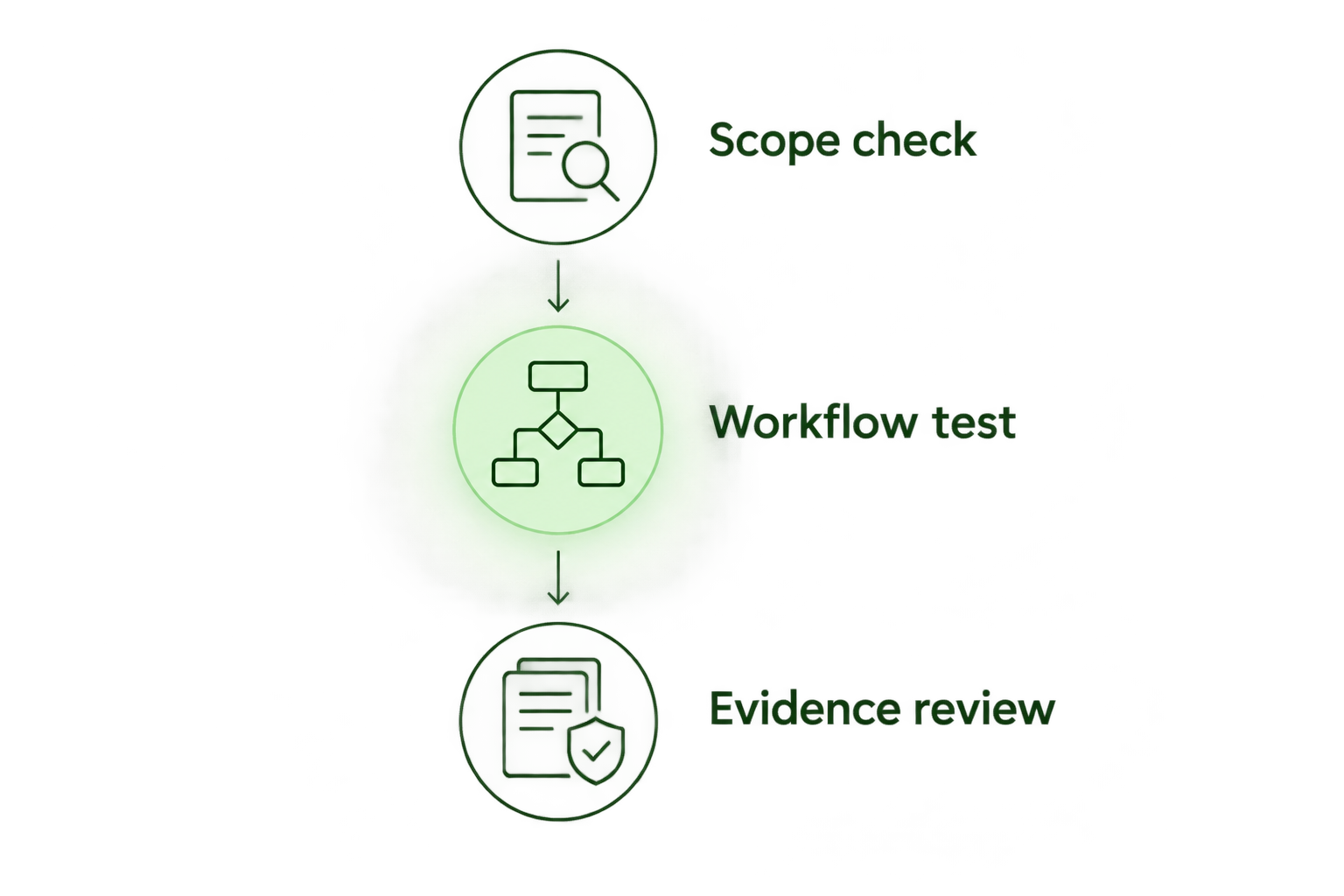
Validate responsibilities before accepting the replacement service.
Assign 1 named owner to each acceptance task. Before cutover, require 2 sign-offs: one from the technical owner and one from the service or business owner. Keep unresolved exclusions visible in the decision record.
Which Huntress alternative should you choose?
Choose Arctic Wolf as your starting point when the requirement is outsourced managed detection and response. Prioritize Sophos MDR for a Sophos-centered environment and Red Canary when retaining your existing stack drives the decision.
Choose Defend Wise for flat-fee, white-label security awareness training delivered through an MSP. Choose KnowBe4 when your internal team will administer employee training.
If you are replacing more than one Huntress service, make separate acceptance decisions. A single procurement exercise does not require a single replacement vendor.
FAQ
What's the best Huntress alternative for a mid-size company?
Arctic Wolf is the starting recommendation here for a mid-size company seeking outsourced managed detection and response. Sophos MDR and Red Canary deserve evaluation when your existing environment drives the choice.
Is Defend Wise a replacement for Huntress?
Defend Wise is an alternative for MSP-delivered security awareness training, not managed detection and response. Match the replacement to the specific Huntress service you intend to change.
Should I compare KnowBe4 with an MDR service?
Compare KnowBe4 with training options, not as a substitute for MDR. Employee education and managed threat detection address different security responsibilities.
Is Sophos MDR the right choice if we already use Sophos?
Sophos MDR belongs on your shortlist if Sophos already anchors your environment. Confirm covered systems, escalation procedures, and response authority before treating vendor alignment as a reason to buy.
What should an MSP check before changing training platforms?
An MSP should check the licensing model, white-label requirements, administration workflow, and evidence needs. Assign ownership for roster changes, incomplete training, and client reporting before switching.
Can we keep our existing security tools when changing MDR providers?
Keeping existing tools is a valid evaluation requirement, but compatibility needs written confirmation. Ask each provider to identify supported products, configurations, data sources, and operational exclusions.
How should we compare Huntress alternative contracts?
Compare the billing unit, included services, excluded work, response responsibilities, and exit obligations. Separate the software fee from the internal or MSP work needed to operate the service.
One last thing
Ask every finalist: What work remains with our team after we sign? Put the answer beside the contract scope, not in meeting notes that disappear after procurement.
For your 2026 decision, reject any comparison that treats employee training records and threat-response coverage as interchangeable. The best replacement is the service whose responsibilities match the gap you are trying to close.