Defendify alternatives in 2026
Compare Defendify alternatives for 2026. Choose flat-fee, white-label MSP training or a dedicated awareness platform based on your service requirements.
DefendWise
DefendWise
Defendify brings security awareness training into a broader cybersecurity platform, which suits businesses seeking several security functions together. That breadth is not the same buying requirement as an MSP-owned training service with unlimited seats and white-label delivery. The best Defendify alternative in 2026 is Defend Wise if you need flat-fee, white-label security awareness training for MSPs; KnowBe4 if you need a dedicated security awareness training platform.
TL;DR
- Among Defendify alternatives, Defend Wise security awareness training fits MSPs seeking flat-fee, white-label delivery with unlimited seats.
- KnowBe4 fits buyers evaluating a dedicated security awareness training platform rather than a broader cybersecurity platform.
- Stay with Defendify when its broader security functions remain part of your requirements.
- Compare service scope, client administration, evidence requirements, and contract terms before switching.
Why this matters
Replacing a cybersecurity platform and replacing its training component are different projects. Treat them as the same project and you risk removing security functions that your clients still need.
For an MSP, the decision also reaches beyond course content. You need to decide who owns the client relationship, how training enters your service bundle, and what happens when client headcounts change. A useful 2026 shortlist starts with those operating requirements, not a feature-count contest.
Choose the service model first. Choose the training platform second. A specialist can fit your training business without replacing every function of a broader platform.
Defendify alternatives at a glance
These options serve different purchasing requirements. The table separates the incumbent's broader scope from the narrower training decision; it does not treat every platform as interchangeable.
| Platform | Best for | Standout characteristic | Difference from Defendify | Main trade-off |
|---|---|---|---|---|
| Defendify | Businesses seeking multiple cybersecurity functions together | Broader cybersecurity platform that includes awareness training | The incumbent benchmark | Broader scope needs a broader replacement assessment |
| Defend Wise | MSPs packaging security awareness training under their own brand | Flat-fee, white-label training with unlimited seats | A training-focused MSP offering | Not a replacement for a broader cybersecurity stack |
| KnowBe4 | Buyers seeking a dedicated security awareness training platform | Focus on security awareness and human risk | A specialist training choice rather than a like-for-like platform replacement | Other security functions still need separate coverage |
Do not read this as a universal ranking. A platform that fits an internal security team does not automatically fit an MSP reselling training across end-client organizations. Your delivery model determines which differences matter.
1. Defend Wise: best for white-label MSP training
Defend Wise security awareness training is best for MSPs that want flat-fee, white-label delivery with unlimited seats. Its proposition is specific: package training as your service without making the platform subscription depend on a per-seat model.
That distinction matters when you want to include training across your client base rather than revisit the platform economics with every headcount change. Unlimited seats address the subscription model; they do not remove your responsibility for onboarding, client communication, or service management.
Where the platform shines
- Flat-fee structure: The commercial model does not depend on purchasing a separate platform seat for each learner.
- Unlimited seats: You can evaluate coverage without treating every additional learner as another platform seat purchase.
- White-label delivery: The offering fits an MSP-owned security awareness training service.
- Defined buyer: The platform is built around MSPs serving end-client organizations, rather than positioning training solely as an internal corporate purchase.
Where the platform falls short
- Narrower scope: Security awareness training does not replace the wider security functions you use elsewhere.
- Service work remains: A flat-fee subscription does not mean your team spends no time managing the client service.
- Not every buying model fits: An organization seeking one supplier for a broader cybersecurity program has a different requirement.
Head-to-head with Defendify
| Dimension | This alternative | Defendify |
|---|---|---|
| Offering scope | Security awareness training for MSPs | Broader cybersecurity platform including training |
| Central buying reason | Flat-fee, white-label training with unlimited seats | Several cybersecurity functions together |
| Replacement boundary | Evaluate as the training component | Assess all functions currently in use |
Best for: MSPs that want to sell security awareness training under their own brand and prioritize a flat-fee subscription structure.
Before committing in 2026, separate the subscription decision from the delivery decision. Write down what your technicians and account managers must still do, then evaluate those tasks during a demonstration. Verdict: Buy for a training-focused MSP requirement; skip as a whole-platform replacement.
2. KnowBe4: best for a dedicated awareness training program
KnowBe4 is a dedicated security awareness training and human risk management vendor. It belongs on the shortlist when your central buying question is how to run an awareness program, rather than how to consolidate several cybersecurity functions.
Start with your program requirements. Ask the vendor to demonstrate the learner experience, administration, and reporting against your actual client needs instead of treating the product category as proof of fit.
Where KnowBe4 shines
- Training specialization: Security awareness is central to the offering, rather than simply the reason you are reviewing one component of a broader platform.
- Program-oriented evaluation: Buyers can assess KnowBe4 against a defined awareness training brief.
- Relevant shortlist position: It gives security teams a specialist option to compare with a broader cybersecurity platform.
Where KnowBe4 falls short
- Not a whole-platform substitute: Selecting an awareness specialist does not replace unrelated security functions.
- MSP fit requires examination: An internal training use case is not sufficient proof that the delivery model matches your resale requirements.
- Scope still needs discipline: Buying a training platform does not decide your client communication, training policy, or evidence responsibilities.
Head-to-head with Defendify
| Dimension | KnowBe4 | Defendify |
|---|---|---|
| Primary comparison | Dedicated awareness training and human risk management | Broader cybersecurity platform |
| Best evaluation brief | Requirements for an awareness program | Requirements across several security functions |
| Switching boundary | Training and related program workflows | Every incumbent function you intend to replace |
Best for: Security teams that want a dedicated awareness training platform and will assess MSP delivery requirements separately where relevant.
Ask for a demonstration built around your workflow, not a general product tour. Verdict: Buy when dedicated awareness training is the requirement; hold until your delivery model is confirmed.
Why people switch from Defendify
A defensible switching decision starts with a mismatch between the service you need and the scope you buy. These are reasons to evaluate alternatives, not claims about Defendify customer churn or dissatisfaction.
Your requirement is training, not platform consolidation
If the purchase brief is security awareness training, compare training providers directly. Broader cybersecurity scope is useful only when you intend to use it and assign responsibility for it.
List the incumbent functions your team actually uses. For each function, name the replacement or explicitly decide to retain it; do not assume a training specialist covers the rest.
Your MSP service needs white-label delivery
White-label training is a service-positioning requirement. It affects how you present the offering to clients and who owns the commercial relationship.
Write that requirement into your evaluation brief before a demonstration. Ask to see the complete client-facing journey rather than accepting a general statement about partner suitability.
You want a flat-fee training model
An MSP that prioritizes unlimited-seat training has a clear reason to consider a flat-fee alternative. That is a choice about the desired model, not evidence that the incumbent's contract has changed.
Keep the distinction precise. Subscription structure and service profitability are related, but they are not identical: your labor, support obligations, and client packaging still affect the result.
Your client evidence requirements have changed
A new client requirement can justify reviewing the training component without condemning the incumbent platform. Start with the evidence the client needs, then ask each vendor to demonstrate how your team would produce it.
Do not equate a product demonstration with compliance approval. The client still needs to assess whether its training process and records meet its obligations.
How to evaluate a switch in 2026
Use a 30-minute review to define the decision before scheduling vendor demonstrations. This is a suggested planning exercise, not a promised implementation time.
Separate the review into three questions: what must stay covered, how the MSP will deliver training, and what evidence the client needs. Those questions keep a narrow training purchase from becoming an accidental security-stack replacement.
Define scope
Create an inventory of the functions you use today. Mark each one as retain, replace, or retire, and assign an owner to every replacement.
Include services outside training in this inventory. A clean training migration is still an incomplete project if another security responsibility loses its owner.
Test delivery
Use 2 client organizations as evaluation scenarios: one with straightforward administration and another with more demanding service requirements. These are recommended test cases, not a claim about any vendor's capacity.
Ask the same questions in both scenarios. Who enrolls learners, who handles changes, who answers client questions, and who checks whether the service has been delivered? Record the work your MSP owns rather than assuming a platform removes it.
Check evidence
Bring 1 evidence request from a real client requirement to the demonstration. Ask the vendor to show the process from training activity to the record your client needs.
Inspect the result, not just the reporting menu. Confirm what the record contains, how your team obtains it, and whether the client can use it for the intended purpose.
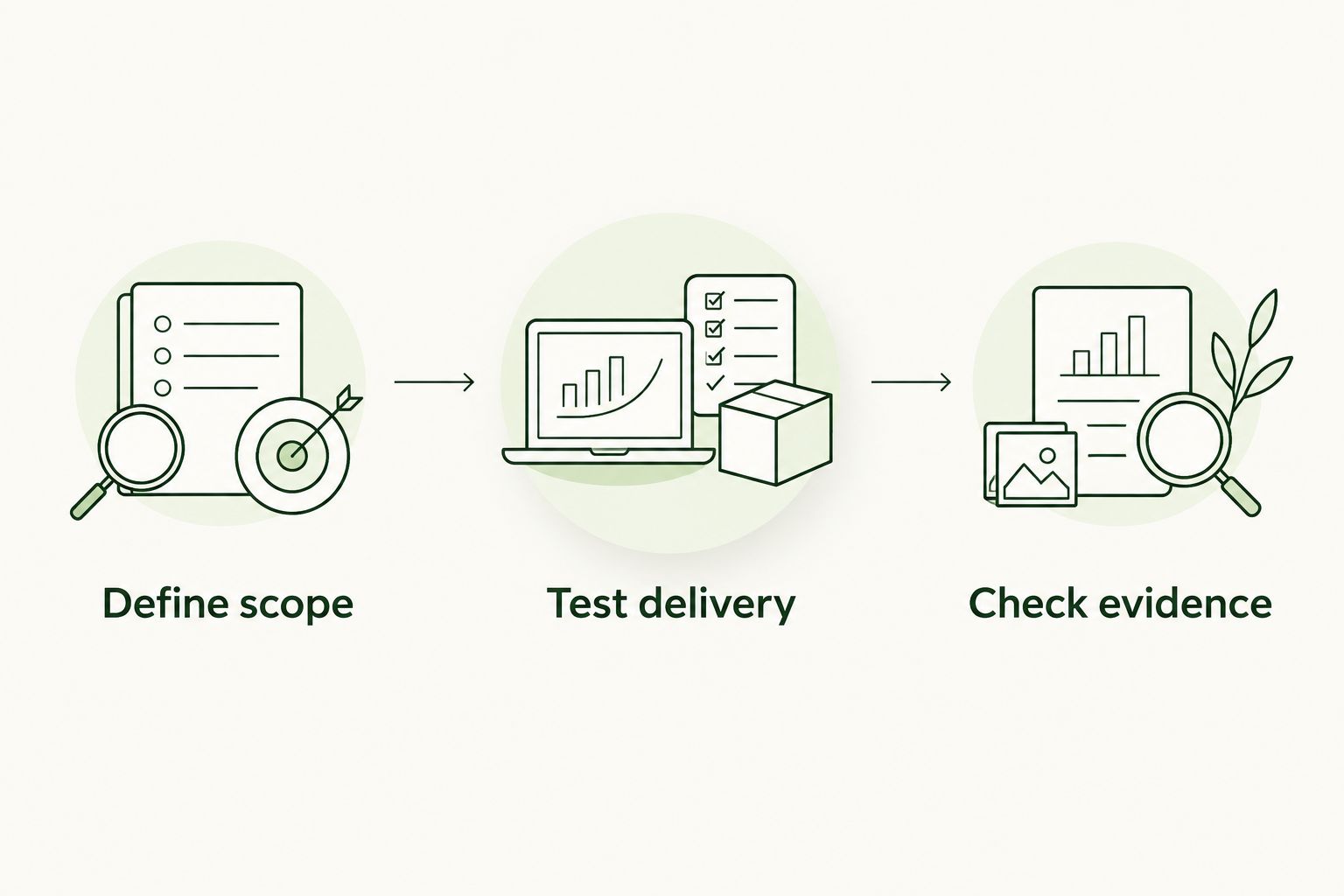
Confirm replacement boundaries before judging the training workflow.
Record the answers in a shared decision sheet. The purpose is not to award points for the longest feature list; it is to identify unresolved responsibilities before you sign.
When staying with Defendify is the right call
Stay with Defendify when its broader cybersecurity scope remains part of your requirements and the current arrangement meets them. A specialist training platform is not automatically a better choice simply because training is the topic of this comparison.
For your 2026 review, compare the complete operating arrangements. Keeping the incumbent, replacing only training, and changing the wider platform are different decisions with different responsibilities.
Avoid switching merely to simplify the subscription story. If the change leaves your team coordinating more services or rebuilding necessary processes, include that work in the decision. Flat-fee training solves a defined purchasing requirement, not every operational problem.
FAQ
What's the best Defendify alternative for MSPs in 2026?
Defend Wise is the best fit when your requirement is flat-fee, white-label security awareness training for MSPs with unlimited seats. It is a training choice, not a replacement for every function of a broader cybersecurity platform.
Is KnowBe4 a like-for-like replacement for Defendify?
No. KnowBe4 is a dedicated security awareness training and human risk management vendor, while Defendify has broader cybersecurity scope. Inventory the functions you use before deciding what to replace.
Should an MSP replace the whole platform to change training?
Not automatically. Separate the training requirement from the rest of the security service, then identify which functions you will retain, replace, or retire.
Does unlimited-seat training remove all MSP administration?
No. Unlimited seats describe the subscription model, not the amount of client service work. Your MSP still needs defined responsibilities for onboarding, communication, and service management.
What should I ask during an alternative's demonstration?
Ask the vendor to demonstrate your delivery workflow and a real client evidence requirement. Use the same scenarios across vendors so the comparison reflects your service rather than different sales presentations.
Can a security awareness platform guarantee compliance?
A platform alone does not establish compliance. Your organization must assess the applicable requirements, deliver the required training, and maintain appropriate records and processes.
When should I keep Defendify instead of switching?
Keep Defendify when its broader security functions remain necessary and the current arrangement meets your requirements. Evaluate the full replacement workload before changing a platform that already fits.
One last thing
Your most revealing evaluation question is not about course quantity. Ask: Which responsibilities remain with our MSP after the platform is deployed?
That answer separates subscription simplicity from service simplicity. Defend Wise fits the flat-fee, white-label training requirement; your operating plan determines how you turn that platform into a client service.