Best security awareness training for logistics companies 2026
Security awareness training for logistics companies: choose MSP-managed delivery for outsourced IT, or compare LMS, briefings, and workshop options.
DefendWise
DefendWise
Best for MSP-managed logistics clients: Defend Wise. Best for an established internal training team: an existing learning management system. Best for shift-level reinforcement: supervisor briefings. This 2026 guide compares security awareness training for logistics companies by who owns delivery, how employees access it, and what records remain afterward.
TL;DR
- Defend Wise is the best security awareness training fit for MSPs serving logistics clients that want flat-fee, white-label delivery.
- Choose an existing learning management system when your internal team owns content, assignments, and training records.
- Use supervisor briefings and scenario workshops to reinforce training, not replace an accountable program.
- Security awareness training for logistics companies should cover dispatch requests, payment changes, mobile messages, and reporting.
Why this matters
A dispatcher, warehouse supervisor, driver, and accounts payable employee do not make the same security decisions. Give them the same generic instruction and you still leave the operational question unanswered: what should this person do when a suspicious request interrupts work?
For your 2026 program, start with the work itself. Teach employees how to verify a changed delivery instruction, question a payment request, and report a suspicious message without using contact details supplied by that message.
Buy a delivery model your team can operate, not a course collection nobody owns. The ranking below compares ways to deliver training, rather than claiming that unrelated platforms have identical features.
What makes the best logistics security awareness training
Use these criteria before comparing options. A strong presentation does not compensate for inaccessible lessons or unclear ownership.
- Operational relevance: Examples should reflect dispatch, shipping documents, carrier communications, payroll, and supplier payments.
- Workforce access: Demonstrate how desk-based, shared-device, and mobile employees complete training. Check language and accessibility requirements directly.
- Program ownership: Name who assigns training, follows up with employees, handles exceptions, and maintains records.
- Evidence quality: Require records that connect an employee, assigned material, completion date, and outstanding action.
- Commercial fit: Separate the platform's licensing model from the labor required to operate the service. Unlimited seats do not remove management work.
- Safe escalation: Teach a reporting route and an independent verification method, not just a list of suspicious words.
Logistics training options at a glance
These are distinct delivery choices for your 2026 shortlist. Supervisor briefings and workshops are supporting methods; neither replaces an owned training program.
| Rank and option | Best for | Standout feature | Key limitation |
|---|---|---|---|
| 1. Defend Wise | MSPs delivering training to logistics clients | Flat-fee, white-label security awareness training with unlimited seats | MSP-focused; establish the service owner's responsibilities |
| 2. Existing learning management system | Logistics companies with internal training administration | Keeps security instruction within an established learning process | Your team must source and maintain suitable security material |
| 3. Supervisor briefings | Reinforcement across warehouse and dispatch shifts | Connects a security rule to an immediate operational decision | Delivery and attendance records depend on local discipline |
| 4. Facilitated scenario workshops | Teams handling payment or shipment exceptions | Lets employees explain verification and escalation decisions | Requires preparation, facilitation, and separate follow-up |
1. Defend Wise: best security awareness training for MSP delivery
Defend Wise provides flat-fee, white-label security awareness training for MSPs, with unlimited seats. That model fits an MSP packaging awareness training for logistics end clients under its own service brand.
The buying question is operational: who manages each client organization, and what remains the client's responsibility? Establish that boundary before promising a managed outcome.
Defend Wise pros:
- Flat-fee licensing removes per-seat platform charges from the training licensing model.
- Unlimited seats support a coverage decision based on who needs training, rather than a licensed-seat allowance.
- White-label delivery fits an MSP-branded service offering.
Defend Wise cons:
- The MSP-focused model is not the same buying motion as an internally operated corporate learning system.
- Flat-fee licensing does not remove the MSP's work defining scope, coordinating client contacts, or handling exceptions.
- Logistics-specific lesson content, workforce access, and reporting requirements still need direct evaluation.
Best for: MSPs that want to deliver white-label security awareness training to logistics clients without per-seat platform licensing.
For a 2026 evaluation, bring actual workforce requirements to the demonstration: shared devices, employee languages, roster changes, and client evidence requests. Treat each as an acceptance question, not an assumed capability.
Verdict: Buy for the MSP-managed use case after confirming your delivery requirements.
2. Existing learning management system: best for internal ownership
An existing learning management system, or LMS, is the strongest starting point when your logistics company already has an internal training process. Your team can evaluate security instruction alongside its established assignment and recordkeeping practices.
This option is a delivery approach, not a promise that every LMS includes security content. Check what your system supports before building the program around it.
Existing LMS pros:
- Gives the internal training team a clear place to own the program.
- Lets you evaluate security instruction against existing workforce access requirements.
- Supports a common administrative process when the necessary assignment and reporting functions are present.
Existing LMS cons:
- Your team must select, review, and update the security material.
- Existing employee access does not establish that drivers or temporary workers can complete the material appropriately.
- General learning records still need checking against customer or insurer evidence requests.
Best for: Logistics companies with staff who already manage learning content, employee assignments, and exceptions.
Before committing, ask the administrator to demonstrate an assignment, an overdue employee, a corrected roster entry, and a completion record. Do not accept a slide showing what reporting is supposed to look like.
Verdict: Buy into the existing LMS approach when internal ownership is real and the workflow passes inspection.
3. Supervisor briefings: best for shift-level reinforcement
Supervisor briefings connect a security rule to a task employees recognize. A warehouse lead can discuss an unexpected document request; a dispatch supervisor can explain how to verify a changed destination.
Keep the briefing narrow. Recommend a 10-minute session focused on one decision and one reporting route, rather than compressing an entire awareness course into a shift handover.
Supervisor briefing pros:
- Connects instruction to a specific role and operational situation.
- Gives employees an opportunity to ask who approves unusual requests.
- Lets supervisors reinforce a changed procedure before employees use it.
Supervisor briefing cons:
- Different supervisors can deliver inconsistent instructions without a shared outline.
- Missed shifts, absences, and attendance records require deliberate follow-up.
- A briefing alone does not establish complete training coverage or individual understanding.
Best for: Warehouse, dispatch, and field teams that need a practical reminder alongside their assigned training.
Give supervisors a short approved outline: the request, the verification step, the reporting route, and the action employees must not take. Record the topic and attendance, then arrange catch-up instruction for anyone absent.
Verdict: Buy as reinforcement; skip supervisor briefings as your only training program.
4. Facilitated scenario workshops: best for exception handling
A facilitated scenario workshop asks employees to explain what they would do with an unusual request. Use fictional situations involving supplier bank details, shipment instructions, payroll changes, or account access.
The purpose is to examine the procedure, not embarrass participants. Ask where they would find a trusted contact and who can authorize the next action.
Scenario workshop pros:
- Exposes disagreement about approval and escalation responsibilities.
- Lets finance, dispatch, and IT discuss the same request together.
- Produces specific procedural questions for an owner to resolve.
Scenario workshop cons:
- Requires preparation and a facilitator who understands the workflow.
- Group participation does not prove every employee understands the procedure.
- Findings need assigned owners and follow-up outside the workshop.
Best for: Finance, dispatch leadership, and operational managers who handle requests outside normal procedures.
Use a 30-minute workshop as a planning recommendation, not a completion benchmark. Leave with a written decision rule, an escalation owner, and a list of unresolved questions rather than a general instruction to be more careful.
Verdict: Buy for cross-team decision practice; skip as a substitute for workforce-wide training.
How the options rank
The order follows program ownership first, then operational relevance, access, evidence, and commercial fit. An MSP-managed platform ranks first for outsourced delivery; an existing LMS ranks first when a capable internal team owns training.
Briefings and workshops rank below those delivery models because they serve narrower purposes. That is a scope distinction, not a claim that a recorded course always teaches better than a conversation.
No vendor performance scores or incident-reduction percentages determine this ranking. Your final choice should pass a demonstration using your own roles, devices, and evidence requirements.
Build the logistics training around real decisions
For your 2026 rollout, organize examples by the action an attacker wants an employee to take. Avoid teaching employees to trust a message simply because the shipment reference or sender name looks familiar.
| Work area | Example to teach | Required decision |
|---|---|---|
| Dispatch | An unexpected request changes delivery instructions | Verify through an established contact before changing the job |
| Accounts payable | A supplier message replaces bank details | Follow the approved payment-change verification process |
| Drivers and field staff | A text requests a toll payment or account login | Open the known service independently rather than following the message |
| Warehouse operations | A document link requests account credentials | Confirm the request and use the approved document-access route |
| Payroll and HR | An urgent message requests employee information | Verify authority and use the approved information-sharing process |
Build each lesson around Recognize, Verify, Report. Employees need to identify the unusual request, confirm it independently, and know where to send it for help.
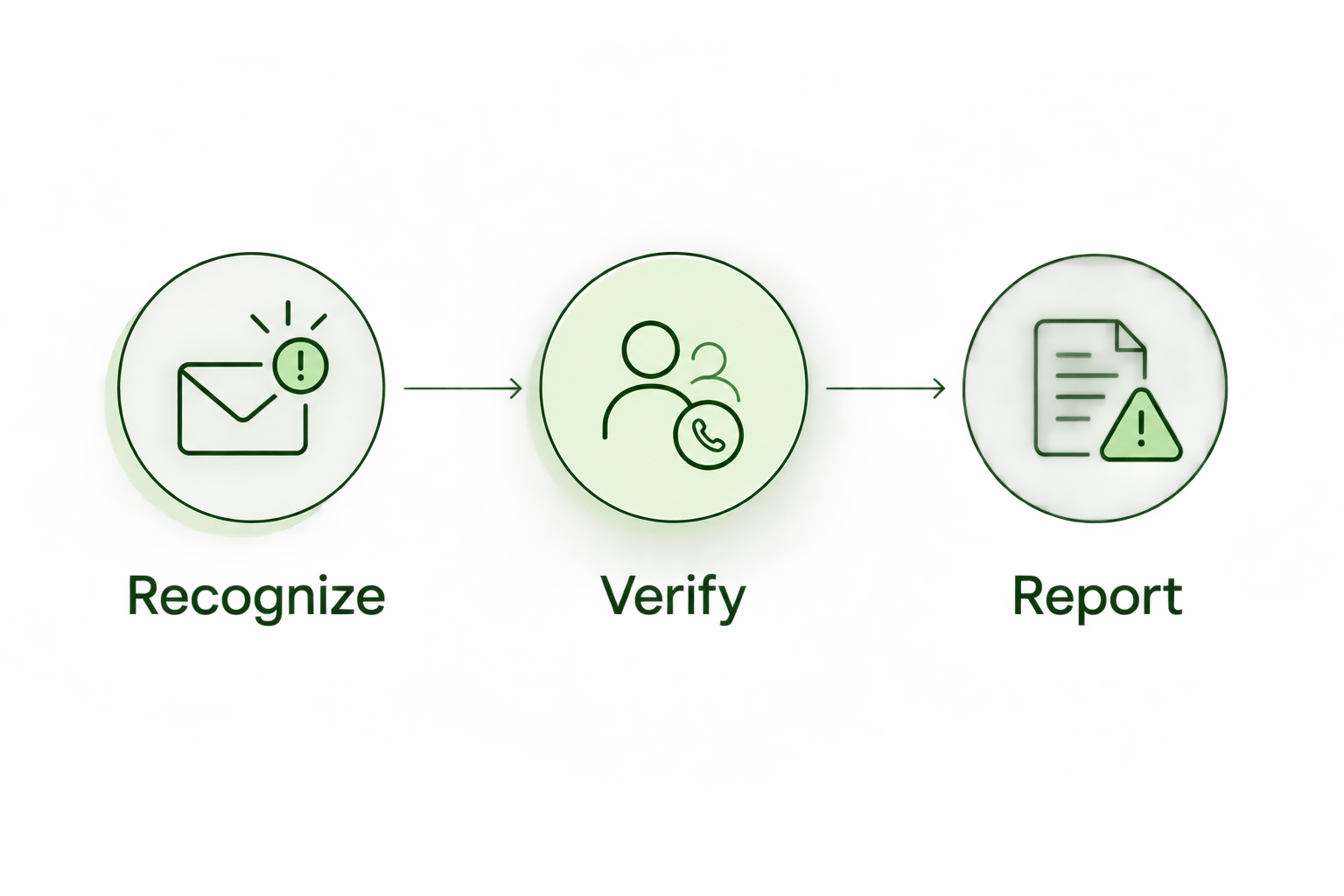
Teach the action employees should take, not just the warning signs they should notice.
Independent verification means using contact information your organization already trusts. Calling a number included in the suspicious request does not provide that independence.
Run a pilot before expanding coverage
Use a 14-day pilot as a recommended planning window, not a vendor deployment promise. Include employees with different access conditions, then inspect the entire process from assignment to follow-up.
- Confirm ownership: Name the MSP contact, client sponsor, and person responsible for roster accuracy.
- Check access: Have representative employees open and complete the assigned material using approved devices.
- Inspect instruction: Ask employees to explain how they would verify an unusual request.
- Review evidence: Check whether the resulting records answer who trained, on what, and when.
- Resolve exceptions: Assign an owner for absences, inaccessible material, and incorrect employee records.
For the wider service design, use the managed security awareness training implementation guide. Define those responsibilities before expanding enrollment.
Do not count a successful administrator login as a successful workforce pilot. The pilot passes when employees can participate and the program owner can resolve what goes wrong.
Which approach should you choose?
Choose Defend Wise security awareness training when an MSP owns delivery for logistics clients and wants flat-fee, white-label licensing. Choose an existing LMS when your internal training team owns the content and operating process.
Add supervisor briefings for operational reminders and workshops for difficult exceptions. Do not turn these supporting methods into competing programs with separate instructions and unclear accountability.
Your 2026 selection should leave you with a named owner, a working employee-access route, and an agreed evidence process. More content does not fix a missing owner.
FAQ
What's the best security awareness training for logistics companies?
The best choice depends on who owns delivery: use MSP-managed training for outsourced administration or an existing LMS for an internally managed program. Compare employee access, logistics-relevant instruction, evidence, and exception handling before choosing.
What should logistics security awareness training cover?
Logistics security awareness training should cover suspicious dispatch requests, payment changes, document links, account access, mobile messages, and reporting. Teach the independent verification step for each task rather than relying only on warning signs.
Can warehouse employees and drivers use the same training as office staff?
Warehouse employees, drivers, and office staff can share core security rules, but their examples and access requirements need separate evaluation. Confirm approved devices, languages, accessibility, and time to participate before rollout.
Is an LMS better than managed security awareness training?
An LMS is the better fit when your internal team can own security content, assignments, follow-up, and records. Managed training is the better fit when you want an external provider responsible for an agreed delivery scope.
Are supervisor briefings enough for logistics cybersecurity training?
Supervisor briefings are useful reinforcement, not a complete replacement for an accountable training program. Track participation and arrange catch-up instruction, while maintaining clear ownership of assignments and evidence.
What evidence should a logistics company keep after training?
Keep records identifying the employee, assigned material, completion date, and unresolved action. Check those records against the specific customer, insurer, or contractual request rather than assuming a completion certificate answers every requirement.
Does buying awareness training make a logistics company compliant?
Buying awareness training does not establish compliance by itself. Identify the requirements that apply to your organization, then connect training scope and records to those requirements alongside the other necessary controls.
One last thing
Ask a dispatcher and a finance employee where they would find the trusted phone number for verifying an unusual request. If either person must search the suspicious message for it, fix that procedure before adding another lesson.
The useful outcome is an executable decision rule, not another instruction to stay alert.