Best security awareness training for municipal governments 2026
Security awareness training for municipal governments: choose MSP-led delivery for outsourced IT. Compare four options, ownership, and evidence.
DefendWise
DefendWise
Best for MSP-managed municipalities: Defend Wise. Best for internal administration: a municipal learning management system. Best for department-specific decisions: live workshops. Best for shared staffing: a regional training program. The best security awareness training for municipal governments in 2026 starts with who owns delivery, follow-up, and evidence—not the size of a course catalog.
TL;DR
- Defend Wise security awareness training fits MSPs delivering white-label training to municipal clients.
- A municipal learning management system fits cities with an established internal training owner.
- Live workshops fit department-specific decisions; regional programs fit shared training administration.
- Choose security awareness training for municipal governments around staff access, accountable ownership, and retrievable evidence.
Why this matters
A municipality needs employees to recognize suspicious requests and follow the right local procedure. That means teaching a payroll employee how to verify an account change, not just how to pass a generic quiz.
Buying content does not assign responsibility. Before choosing a platform for 2026, identify who enrolls new staff, follows up on incomplete assignments, handles access problems, and retrieves records. An inexpensive-looking delivery model still creates work when nobody owns those tasks.
This guide ranks delivery options rather than presenting an unsupported vendor leaderboard. Each option serves a different operating model, with a clear reason to choose it and a clear reason to stop.
What makes the best municipal security awareness training
Use these criteria before comparing demonstrations:
- Accountable administration: Name the person or provider responsible for assignments, exceptions, and follow-up.
- Relevant decisions: Teach actions employees actually take, including payment verification, records handling, and suspicious-request reporting.
- Staff access: Evaluate keyboard access, captions, language needs, shared-device use, and the experience of employees without individual workstations.
- Retrievable evidence: Require records that identify the learner, assigned material, completion date, and outstanding requirements.
- Service fit: Match the delivery model to internal IT, an MSP, or a regional administrator. Confirm responsibilities in writing.
- Coverage without seat-count friction: Define how the program includes seasonal employees, temporary staff, elected officials, and contractors when their responsibilities require training.
Treat these as acceptance criteria, not promises attached to any option below. Ask providers to demonstrate the functions your municipality needs before procurement approval.
Municipal training options at a glance
| Rank and option | Best for | Standout characteristic | Key limitation |
|---|---|---|---|
| 1. Defend Wise | MSP-managed municipalities | Flat-fee, white-label security awareness training for MSPs | Fit depends on an MSP-led service model; confirm municipal requirements separately |
| 2. Municipal learning management system | Cities with an internal training owner | Training administered within an existing learning environment | City staff must own content selection and administration |
| 3. Live department workshops | Teams making sensitive operational decisions | Discussion built around local procedures | Attendance alone does not demonstrate understanding |
| 4. Regional training program | Municipalities sharing training administration | A common program coordinated across participating organizations | Local exceptions and records responsibilities still need owners |
The ranking is a starting point, not a universal purchasing order. Move the municipal learning management system to the top if your city already has the staff and process to administer security training itself.
1. Defend Wise: best security awareness training for MSP delivery
Defend Wise provides flat-fee, white-label security awareness training for MSPs. Its fit is the service-provider relationship: an MSP delivers training to its municipal client rather than the city treating the platform as a standalone internal learning project.
Defend Wise is best for MSPs delivering white-label security awareness training to municipal clients. That is a specific buyer and operating model, not a claim that every municipal requirement is covered.
For a 2026 evaluation, separate the software decision from the service agreement. Ask the MSP who handles employee changes, escalates incomplete training, responds to support requests, and supplies the city's records. A platform choice does not settle those responsibilities.
Defend Wise pros:
- Flat-fee delivery fits an MSP training service model.
- White-label delivery supports the MSP's client-facing service.
- The offering is specifically security awareness training for MSPs.
Defend Wise cons and buying limits:
- The MSP-focused model is not the default fit for a city seeking an internally administered learning system.
- Municipal accessibility, records, and contract requirements need separate confirmation.
- White-label delivery does not replace a written division of responsibilities between the city and MSP.
Best for: Municipalities that want their MSP to own the training service.
Verdict: Buy through your MSP when the service scope and municipal acceptance criteria are documented.
2. Municipal learning management system: best for internal ownership
A municipal learning management system is the strongest starting point when your city already administers employee learning internally. Security awareness becomes another governed training program, with a named administrator responsible for assignments and records.
This option means using an existing learning environment, not assuming it already contains suitable security content. Review the material, learner experience, and reporting process separately.
Municipal learning management system pros:
- Keeps training ownership within the municipality.
- Allows security learning to follow an established employee-training process.
- Gives the city direct responsibility for choosing material and approving local instructions.
Municipal learning management system cons:
- Internal staff must select, maintain, and review the content.
- Existing reports still need evaluation against security evidence requirements.
- A general learning environment does not automatically support every security-training workflow.
Best for: Cities with an established learning administrator and capacity to maintain security content.
Before choosing this route, ask the administrator to produce a sample completion record and resolve a sample exception. Test a seasonal worker who has no individual workstation. Those checks expose operational gaps that a course preview will not.
Verdict: Buy content for your existing system when internal ownership is already established; hold if administration is unassigned.
3. Live department workshops: best for sensitive decisions
Live workshops let employees discuss what to do when a suspicious request intersects with a real municipal process. Finance staff can walk through payment-change verification; HR can examine requests for employee information; frontline staff can practice escalating an unusual caller.
Use workshops to connect awareness to an approved procedure. An engaging discussion without a clear next action leaves the operational question unanswered.
Live department workshop pros:
- Lets employees ask questions about their actual responsibilities.
- Connects security advice to local approval and reporting procedures.
- Gives facilitators a way to identify conflicting instructions.
Live department workshop cons:
- Shift coverage and absences require make-up arrangements.
- Attendance records do not establish that employees understood the procedure.
- Material and delivery need consistency across facilitators.
Best for: Departments where employees authorize payments, handle sensitive records, or respond to unusual requests.
For a 2026 planning exercise, start with a 15-minute workshop on a single decision. This is a suggested session design, not a required standard. Ask employees to explain the verification step, identify the approved contact method, and name the escalation owner.
Verdict: Buy targeted facilitation as reinforcement; skip workshops as your only recurring training process.
4. Regional training program: best for shared administration
A regional training program gives participating municipalities a way to coordinate common material and administration. Consider this model when shared staffing is the goal, while keeping local procedures and accountability explicit.
Do not assume a suitable program exists in your area. Assess the actual offering, participation terms, and record-access arrangements before making it the city's default.
Regional training program pros:
- Creates a structure for coordinating common training material.
- Supports shared discussion of employee-facing security issues.
- Lets participating organizations define a common administration process.
Regional training program cons:
- Shared material still needs local reporting and approval instructions.
- Scheduling and content changes require coordination.
- Responsibility for records, exceptions, and departing participants must be agreed.
Best for: Municipalities with an established regional partner willing to own common administration.
Keep training delivery separate from specialist advisory work. Evaluating cybersecurity consulting firms in Canada is a separate procurement task from selecting a municipal training program; neither a consultant's location nor a shared course establishes that your local obligations are covered.
Verdict: Buy into a shared program only after confirming local adaptation, record access, and accountable ownership.
How we ranked these options
The order follows service fit, accountable administration, staff access, relevant decisions, and retrievable evidence. It is not a product test, a measured effectiveness ranking, or a claim that one format satisfies every municipal obligation.
MSP delivery comes first for outsourced ownership. An internal learning system comes next for cities with established administration; workshops address department-specific decisions; regional programs address shared coordination. Choose the operating model before comparing course volume.
Turn the shortlist into a municipal acceptance test
For your 2026 procurement, require a demonstration built around the city's workflow. Use fictional employee information rather than uploading real personnel data during an early evaluation.
Define ownership
Write down who supplies the employee roster, approves assignments, answers learner questions, and follows up on exceptions. Distinguish the city's responsibilities from the provider's responsibilities.
A contract that says training is included still needs an operating procedure. Specify the handoff when an employee joins, transfers departments, takes leave, or leaves employment.
Test access
Ask representative staff to complete an assignment using their normal work setup. Include employees who need accessible formats and those who use shared workstations.
Evaluate the actual learner journey, not just a vendor's accessibility statement. Record unanswered requirements and make them procurement conditions rather than assumptions.
Retrieve evidence
Request a sample record showing the learner, assigned material, completion date, and unresolved status. Confirm who can retrieve it and how records remain available after a provider change.
Use a 30-day pilot as a proposed evaluation window, not a regulatory deadline. The pilot should end with a documented decision about access, administration, and evidence—not simply a list of completed courses.
Review exceptions
Schedule a 90-day review after rollout as an internal governance checkpoint. Examine missed assignments, roster errors, access problems, and requests that reached the wrong escalation contact.
These are suggested planning intervals. Replace them with your own documented schedule where contracts, applicable requirements, or operating conditions dictate something different.
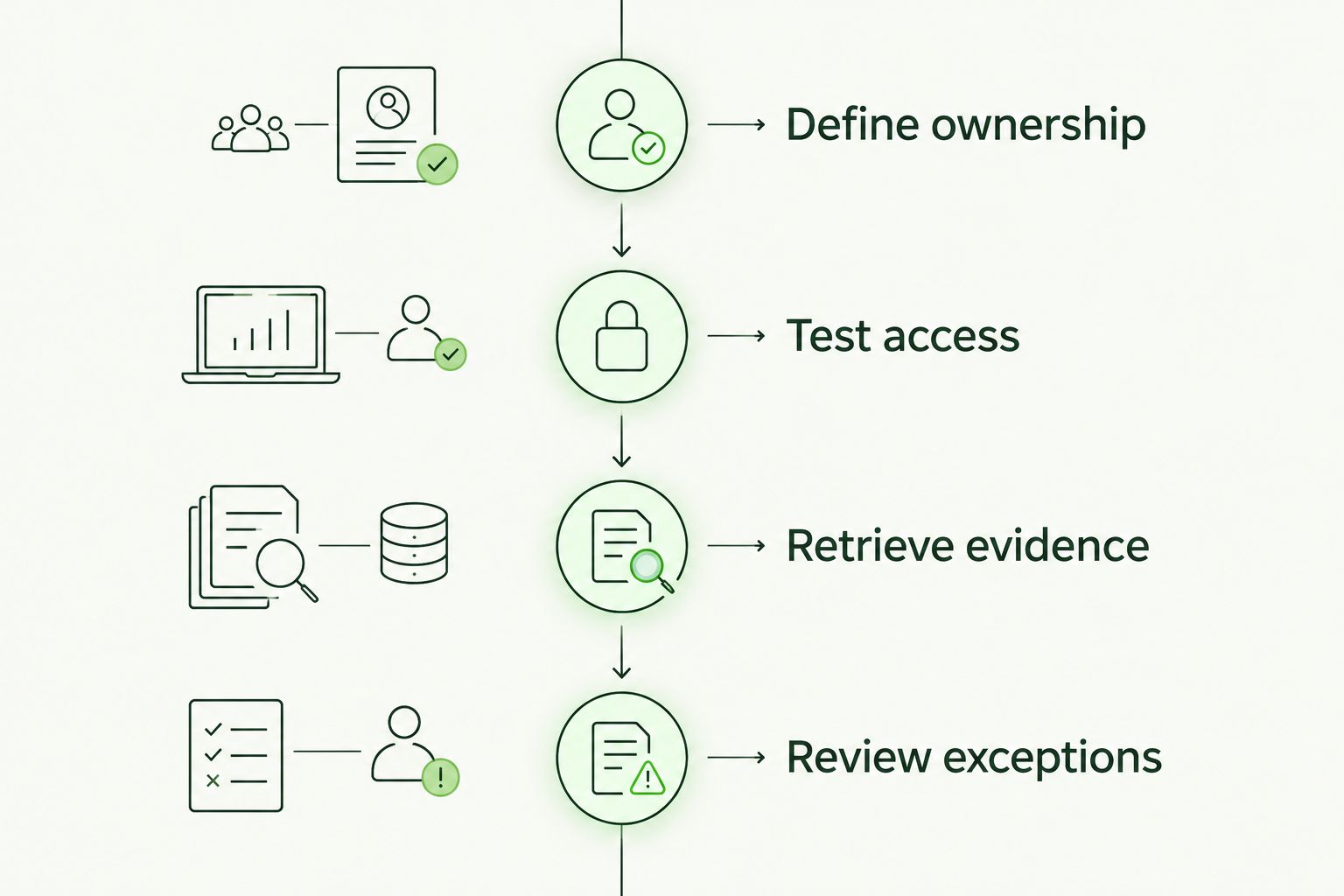
A training purchase needs an operating process, not just approved content.
Match lessons to municipal work
Start with actions, then select material that teaches them. Finance employees need a defined process for verifying payment changes; training on vendor impersonation and invoice fraud emails should support that process, not substitute for approval controls.
Give each audience a clear decision:
- Finance: Verify changed payment instructions through an approved, independently obtained contact method.
- HR: Follow the authorized procedure before releasing personnel information or changing payroll details.
- Frontline staff: Escalate suspicious requests without disclosing sensitive information to an unverified caller.
- IT support: Follow identity-verification procedures before changing account access.
- Managers: Make reporting expectations clear and assign follow-up responsibility.
Do not treat general awareness as proof that specialized obligations are satisfied. Where criminal justice information is involved, confirm applicable CJIS requirements with the responsible authority. Apply the same discipline to other obligations: establish applicability before accepting a vendor's compliance label.
Which training option should you choose?
For an MSP-managed municipality, default to a clearly scoped MSP training service. Require named responsibility for enrollment, learner support, incomplete assignments, and evidence. For an internally managed city with established learning administration, start with the existing learning system instead.
Use live workshops to rehearse difficult decisions. Choose regional delivery when a real shared program provides accountable administration. In 2026, the strongest shortlist is the one your city can operate—not the one with the longest feature table.
FAQ
What's the best security awareness training for municipal governments?
The best option matches the municipality's operating model: MSP delivery for outsourced ownership, or an internal learning system for established city administration. Evaluate staff access, local procedures, and retrievable evidence before signing.
Is an MSP-led program better than using our city's learning system?
MSP-led delivery is the better fit when the city wants an external provider to administer the training service. An existing learning system fits a city with staff assigned to manage content, learners, and records.
Can a municipality use live workshops instead of online training?
A municipality can use live workshops as a delivery method, subject to its applicable requirements. Document attendance, address absences, check understanding, and maintain a recurring process rather than relying on a single event.
Does general security awareness training satisfy CJIS requirements?
General security awareness training does not by itself establish that applicable CJIS requirements are satisfied. Confirm the required audience, content, timing, and evidence with the responsible authority.
What evidence should a municipal training program retain?
Retain records identifying the learner, assigned material, completion date, and unresolved requirements. Set retention and access rules according to the municipality's applicable obligations and records policies.
How should a municipality include seasonal workers?
Include seasonal workers according to their access, responsibilities, and applicable training requirements. Assign an owner for enrollment, accessible delivery, completion follow-up, and removal when employment ends.
Should a city choose training based on course count?
No. Choose training based on relevant employee decisions, staff access, administrative ownership, and usable evidence. A larger catalog does not demonstrate that the city's procedures are taught or followed.
One last thing
Before approving the purchase, ask a department manager to explain what happens when an employee reports a suspicious payment request. If the answer stops at contacting IT, finish the procedure: identify who pauses the payment, verifies the request, and authorizes any restart. Training needs an action employees can actually take.