Symbol Security alternatives in 2026
Compare Symbol Security alternatives for MSPs. Choose Defend Wise for flat-fee, white-label security awareness training, or take control with an internal program.
DefendWise
DefendWise
Symbol Security focuses on security awareness training, so it belongs on your shortlist—not your automatic rejection list. That focus alone does not settle whether a platform fits your MSP's branding, end-client management, and commercial model. The best Symbol Security alternative in 2026 is Defend Wise if you need flat-fee, white-label security awareness training; an internally managed program if you need direct control over content and delivery.
TL;DR
- For MSPs comparing symbol security alternatives, Defend Wise offers flat-fee, white-label security awareness training with unlimited seats.
- An internally managed program fits teams that want direct control over training content and delivery.
- A managed training service fits buyers who want a provider to own execution under an agreed scope.
- Keep Symbol Security when your existing deployment meets your service, reporting, and commercial requirements.
Why this matters
An MSP is not buying training for a single workforce. You are choosing how to deliver training across end-client organizations, present that service under your brand, and manage the work behind it.
The wrong comparison starts with a feature checklist. The useful comparison starts with responsibility: who enrolls users, follows up on incomplete training, answers client questions, and prepares evidence?
For a 2026 shortlist, separate the platform decision from the delivery decision. A new vendor does not automatically remove work. An internal program does not automatically give you a repeatable client service. An outsourced service does not automatically include every task your clients expect.
This guide compares a named platform alternative with two different delivery models. They are not interchangeable software products. Each answers a different question about how your MSP wants to operate.
Symbol Security alternatives at a glance
Use this comparison to choose the type of alternative before evaluating individual features. Keep Symbol Security in the table: an alternative should improve a defined requirement, not merely replace a familiar name.
| Option | Best for | Distinguishing approach | How it differs from Symbol Security |
|---|---|---|---|
| Symbol Security | Buyers evaluating security awareness training, including existing customers assessing whether to stay | A named security awareness training vendor | The baseline against which you should assess a replacement |
| Defend Wise | MSPs seeking flat-fee, white-label security awareness training across end-client organizations | Unlimited seats within a flat-fee platform model | A replacement platform to evaluate against your branding, administration, and commercial requirements |
| Internally managed program | Teams that want to own content selection, delivery, and follow-up | Your organization designs and operates the program | Changes the operating model from vendor selection to internal ownership |
| Managed training service | Buyers that want an external provider responsible for agreed training tasks | Delivery responsibilities are defined in a service agreement | Changes the buying decision from software capabilities to contracted execution |
Do not treat unlimited seats, outsourced delivery, and internal control as versions of the same benefit. They solve different problems. Choose the problem you need to remove first.
1. Defend Wise: best for flat-fee MSP training
Defend Wise provides a flat-fee, white-labeled security awareness training platform with unlimited seats. MSPs use it to train and manage cybersecurity compliance for end-client organizations. The relevant distinction is the business model: you can evaluate training coverage without making seat-based platform billing the organizing principle.
Best for: MSPs that want to offer security awareness training under their own brand using a flat-fee platform model.
Where the platform shines
- Flat-fee structure: The commercial model is not organized around a separate platform charge for each seat.
- Unlimited seats: User coverage does not depend on buying a finite seat allocation.
- White-label delivery: The platform is intended for an MSP-branded security awareness training service.
- End-client orientation: The stated use case is helping MSPs train and manage cybersecurity compliance for client organizations.
The distinction matters when you design your own service bundle. Separate platform economics from the work you still own: onboarding, client communication, exception handling, and evidence review. Unlimited seats describes coverage, not unlimited labor.
Where the platform falls short
- It is not a fully outsourced service by definition. Buying a platform does not establish who owns every operational task.
- The seat model does not settle capability fit. You still need to validate your required workflows before replacing an existing deployment.
- It does not replace your compliance judgment. Training software cannot decide whether a client's evidence satisfies a particular contractual or regulatory requirement.
Make the evaluation concrete. Ask for a walkthrough using the way your MSP actually handles subclients, new starters, departures, incomplete training, and reporting requests. A generic tour is not enough.
For a 2026 switch, make unlimited coverage one acceptance criterion—not the entire acceptance test. Your team must also be able to deliver the service consistently and explain the responsibilities to clients.
Verdict: Buy if flat-fee, white-label delivery is your requirement and the platform passes your operational acceptance checks.
2. Internally managed program: best for direct control
An internally managed security awareness program puts content selection, scheduling, communications, and follow-up under your team's control. It is a delivery alternative rather than a named replacement platform. You decide what gets taught and how the program runs.
Best for: Organizations with an accountable program owner that want direct control over training content and delivery.
Where an internal program shines
- Content ownership: You choose the material and its relationship to internal policies.
- Delivery control: You decide how training fits onboarding, role changes, and recurring education.
- Explicit responsibility: Your organization can assign an owner for each task rather than relying on an assumed vendor workflow.
Internal ownership is useful when your central requirement is control. It is less useful when your central requirement is removing administration from the MSP team.
Where an internal program falls short
- The operating work stays with you. Content selection, delivery, follow-up, and records still need owners.
- Repeatability needs deliberate design. Serving several end-client organizations requires a consistent process, not separate informal arrangements.
- Continuity depends on documentation. Another employee must be able to operate the program when its usual owner is unavailable.
Before selecting this route, write down the recurring tasks. Assign responsibility for each one and define what evidence the program retains. If nobody owns completion follow-up, the program is not ready to replace a vendor-backed workflow.
Do not choose internal delivery merely because your team understands cybersecurity. Subject knowledge and service operations are different responsibilities.
Verdict: Hold until content, administration, follow-up, and evidence ownership are assigned.
3. Managed training service: best for delegated execution
A managed training service is the right model to evaluate when you want an external provider to execute defined tasks. The contract—not the phrase “managed service”—determines what you receive. Specify enrollment, delivery, follow-up, reporting, and exceptions before choosing a provider.
Best for: Buyers that want an external party accountable for an agreed training process.
Where a managed service shines
- Delegated execution: You can assign recurring tasks to a provider through a defined scope.
- Service accountability: The agreement can identify responsibilities and required outputs.
- Clear escalation: You can establish who handles incomplete training and client questions.
Where a managed service falls short
- Scope boundaries still exist. A task outside the agreement remains your responsibility unless separately assigned.
- Delegation is not ownership transfer. Your organization still needs someone to assess whether the service meets its requirements.
- MSP branding requires agreement. Do not assume the provider will deliver under your brand.
For a 2026 evaluation, request the service scope alongside any platform demonstration. Software access and operational ownership are different deliverables.
Verdict: Buy only when the agreement assigns the work you actually want to delegate.
Why people switch from Symbol Security
A sound reason to switch is a requirement your current arrangement does not meet. That requirement might concern the commercial model, branding, responsibility for delivery, or how your team serves end clients. It is not evidence of a defect in Symbol Security.
Use these as switching criteria, not as claims about the competitor:
- Coverage: You want a flat-fee platform with unlimited seats rather than a service decision organized around seat allocations.
- Administration: You need a clear division of work between your MSP, the platform vendor, and each client.
- Evidence: You need defined records and reporting outputs for the obligations your client actually faces.
- Exit: You need a migration plan that preserves the records you must retain.
These criteria turn a vendor search into an acceptance test. If your existing arrangement already satisfies them, changing vendors needs another concrete justification.
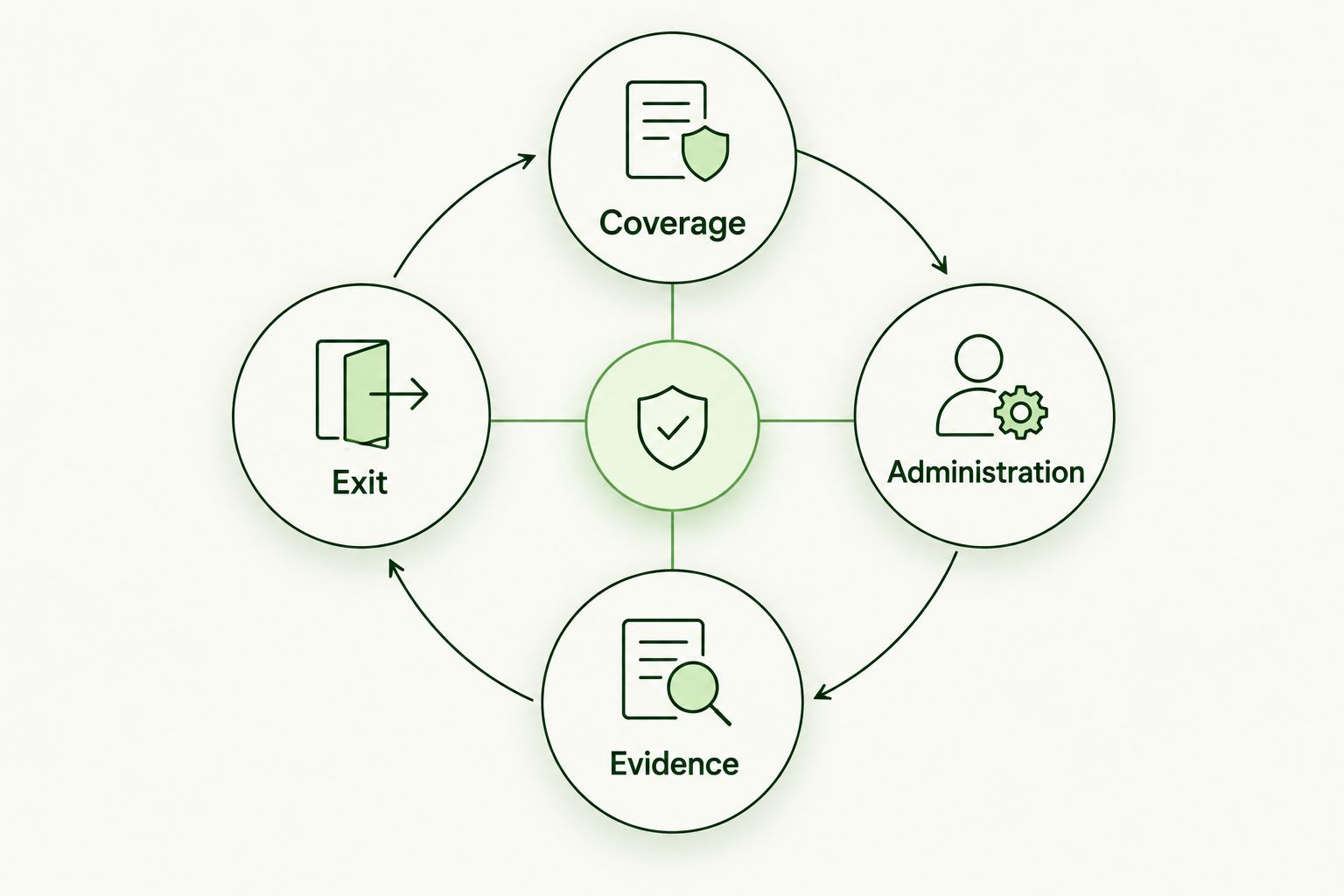
Define the requirement before deciding whether a replacement improves it.
Write the switching reason in a single sentence before booking demonstrations. For example, your objective might be to provide MSP-branded training with unlimited user coverage. That is a requirement you can evaluate; “find something better” is not.
Keep the objective separate from preferences. A different interface is a preference unless it changes a task your team must perform. A different delivery model is material when it changes who owns that task.
Test the work, not the presentation
A security awareness training demonstration should follow your service workflow. Start with an end-client organization, not a vendor's opening slide.
Enrollment and changes
Ask how your team would add a client, enroll its users, handle departures, and correct an enrollment mistake. Identify who performs each action. Confirm any integration you require rather than assuming compatibility.
A successful walkthrough explains both the normal process and the exception. Your team needs to understand what happens when information is incomplete or a client changes its requirements.
Follow-up and client communication
Ask how incomplete training becomes a task someone owns. Then ask what the end client sees and who answers questions.
White-label delivery is relevant here, but branding alone does not define the workflow. Specify which communications should carry your identity and which responsibilities remain with your client.
Evidence and records
Define the evidence request before reviewing the reporting screen. Ask whether your required outputs show the relevant person, activity, status, and period—and how your team obtains them.
Do not equate training completion with compliance. The applicable obligation determines what evidence is needed. A cybersecurity insurance questionnaire, client contract, and internal policy can ask different questions.
Migration and acceptance
For a 2026 migration, decide which existing records need retention before moving users. Assign responsibility for preserving those records and verifying the new setup.
Accept the replacement only after the required workflow works from enrollment through reporting. A signed agreement is not an operational acceptance test.
When staying with Symbol Security is right
Stay with Symbol Security when your existing deployment meets your documented requirements and a replacement does not deliver a defined improvement. Familiarity alone is not a reason to stay, but an unresolved requirement is not a reason to leave without testing the alternative.
Assess the actual service you operate. Can your team deliver it consistently? Do responsibilities match your client commitments? Can you produce the records you need? Does the commercial arrangement fit how you package training?
If the answers meet your acceptance criteria, retain the deployment. Spend your effort improving client participation and service documentation instead of moving the same unresolved responsibilities to another platform.
FAQ
What's the best Symbol Security alternative for MSPs in 2026?
Defend Wise is the best fit for MSPs whose requirement is flat-fee, white-label security awareness training with unlimited seats. Validate the platform against your end-client workflows before replacing an existing deployment.
Is an internal training program better than Symbol Security?
An internal program is better for direct ownership of content and delivery, not automatically for reducing work. Your team must assign responsibility for administration, follow-up, and evidence retention.
Should I choose training software or a managed service?
Choose software when your team wants to operate the program; choose a managed service when you want a provider to execute agreed tasks. The service agreement must identify the responsibilities being delegated.
Does unlimited seating remove all training administration?
No, unlimited seating describes user coverage, not operational responsibility. Enrollment, exceptions, client communication, and evidence review still need assigned owners.
What should I check before switching from Symbol Security?
Check coverage, administration, evidence, and exit requirements. Test the replacement against your actual workflow and preserve the existing records you need to retain.
Does security awareness training prove compliance?
Training completion alone does not prove compliance. Assess the evidence against the specific contractual, regulatory, insurance, or internal requirement that applies.
When should I stay with Symbol Security?
Stay with Symbol Security when your existing deployment meets documented requirements and an alternative does not provide a defined improvement. A different vendor name is not an improvement by itself.
One last thing
Defend Wise is a security awareness training alternative for MSPs that want flat-fee, white-label delivery with unlimited seats. Keep that decision distinct from the service scope you sell.
Before choosing any alternative, write down one task the switch must remove or improve. Name its owner, its required output, and how you will verify the result. If you cannot identify that change, you are selecting a different platform—not a better operating model.