How much does employee negligence contribute to breaches?
Employee negligence data breach statistics need context: 68% human involvement is not 68% employee fault. Read the evidence and an MSP action plan.
DefendWise
DefendWise
Employee negligence does not account for a single defensible percentage of breaches in the evidence cited here: Verizon’s 2024 Data Breach Investigations Report found that 68% of breaches involved a non-malicious human element, not that employees negligently caused 68%. That measure includes people falling victim to social engineering or making errors. For a 2026 risk assessment, use it as evidence that human behavior matters—not as a measure of employee fault.
TL;DR
- Employee negligence data breach statistics need context: Verizon’s 2024 report measured human involvement, not employee fault.
- Verizon reported a non-malicious human element in 68% of breaches; that does not establish negligence.
- Defend Wise fits MSPs seeking white-label security awareness training without per-seat licensing.
- Pair security awareness training with technical controls, clear reporting procedures, and client-specific evidence.
How much does employee negligence contribute to breaches?
The cited research measures human involvement, not a negligence rate. Verizon’s 2024 Data Breach Investigations Report analyzed 30,458 security incidents, including 10,626 confirmed breaches, across 94 countries. Within its breach findings, 68% involved a non-malicious human element.
That is a substantial human-risk signal. It is not permission to classify every deceived employee as negligent, or to claim that training alone would have prevented those breaches.
For MSPs building a repeatable training service, Defend Wise provides white-label security awareness training. Keep the service argument separate from the statistic: training addresses behavior, while the report does not establish a product’s effectiveness.
| Term | What it describes | What it does not establish |
|---|---|---|
| Non-malicious human element | Social engineering victims or people making errors within Verizon’s reported measure | That an employee was negligent |
| Employee negligence | A claim that someone failed to exercise an applicable standard of care | A universal category equivalent to human involvement |
| Malicious insider activity | Deliberate harmful behavior by someone with internal access | An accidental mistake or innocent response to deception |
| Technical weakness | A weakness in systems, configuration, or security controls | That employee training would have stopped exploitation |
These categories answer different questions. An attacker can deceive a person, exploit weak access controls, and reach sensitive information during the same intrusion. Reducing that sequence to employee fault hides the controls you need to examine.
Why this matters
A statistic shapes the service you sell and the controls your client funds. If you describe all human involvement as negligence, you turn a security discussion into a blame discussion.
The distinction matters for MSP reporting. A training completion record shows that someone completed an assigned activity; it does not show that an organization has eliminated phishing exposure, corrected excessive access, or secured every account.
For your 2026 client reviews, separate three questions:
- Exposure: What behavior or workflow did the attacker exploit?
- Containment: Which controls limited—or failed to limit—the damage?
- Evidence: What can you document about training, reporting, and corrective action?
That structure produces a clearer next move than a slide saying employees cause breaches. It also keeps your service promise tied to work you can actually demonstrate.
Human involvement is not the same as employee negligence
Verizon’s 68% figure includes non-malicious human involvement through social engineering or error. The person involved does not have to intend harm, and involvement alone does not resolve whether their conduct was negligent.
Consider an employee who follows a fraudulent request that appears to come from an authorized colleague. The incident review should examine the request, verification procedure, permissions, and available safeguards—not just the employee’s response.
Negligence requires a separate assessment of the applicable duty and the circumstances. A broad breach statistic cannot perform that assessment for a particular employee or organization.
Use “human involvement” when that is what the source measures. Reserve “negligence” for a finding you can support independently, with appropriate legal advice where liability is at issue.
This is not an argument for removing accountability. It is an argument for assigning accountability accurately enough to fix the problem.
What does the 68% breach statistic actually tell you?
The 68% figure tells you that people were involved in a large share of the breaches covered by Verizon’s 2024 analysis. It supports treating human risk as part of your security program rather than as an occasional reminder email.
It does not tell you the probability that your next employee will cause a breach. It also does not quantify the reduction you will get from a particular training platform, campaign schedule, or simulation.
The scope matters: 10,626 confirmed breaches form part of a contributed research dataset, not a census of every breach worldwide. The report’s findings describe that research population.
Use the figure to justify attention. Use your own client records to decide where attention belongs: incomplete assignments, repeated reporting confusion, exceptions to verification procedures, or unresolved access issues.
For a 2026 presentation, label the historical source explicitly. Write “Verizon 2024 DBIR: 68% non-malicious human involvement,” not “2026 employee negligence rate.”
Why employee negligence breach figures vary
Different labels and research methods produce different answers. Before comparing figures, check these distinctions:
- Definition: Human involvement, human error, negligence, and insider activity are not interchangeable. Preserve the source’s wording.
- Intent: An accidental action and deliberate misuse belong to different explanations. Combining them obscures the response each requires.
- Denominator: A percentage of confirmed breaches is not a percentage of all security incidents. Verizon’s report included both, with different totals.
- Population: Research covering organizations across 94 countries is not a direct measurement of your particular client base.
- Attribution: A person’s action can appear alongside a technical failure. Do not assume involvement means sole responsibility.
- Publication date: Historical evidence remains historical when you cite it later. A new presentation date does not update the underlying findings.
These are interpretation checks, not reasons to dismiss the research. A well-scoped statistic is useful precisely because you know what it can—and cannot—support.
When a headline offers a larger number, inspect the category before changing your sales deck. A broader definition can produce a larger percentage without showing that employee conduct became worse.
How should an MSP turn breach statistics into action?
Build a service around the actions your clients need, not around the largest percentage you can find. Use the following sequence to connect external research with client-specific decisions.
Define scope
-
State the claim precisely. Record the report name, publication year, population, and exact category beside the statistic. Keep the qualification wherever the number appears, including proposals and executive summaries.
-
Choose the client question. Decide whether you are addressing phishing recognition, reporting behavior, sensitive-data handling, or verification of unusual requests. A general human-involvement figure cannot identify that priority by itself.
Review controls
-
Inspect the surrounding workflow. Ask how employees verify requests, report suspicious activity, and obtain help. Review access controls and authentication alongside awareness training so the employee is not your only line of defense.
-
Assign responsibility. Give training administration, technical remediation, and business-process changes named owners. A security task without an owner remains an unresolved task, even when the training report looks complete.
Build evidence
-
Retain useful records. Document assignment scope, completion status, reporting procedures, identified gaps, and corrective actions. Separate evidence that an activity occurred from evidence that a control worked.
-
Review the outcome. Ask whether the underlying workflow changed after an incident or exercise. Repeating training without addressing a broken verification process leaves the process untouched.
This sequence makes the statistic a starting point rather than a substitute for assessment. Your client gets an action plan, not another alarming headline.
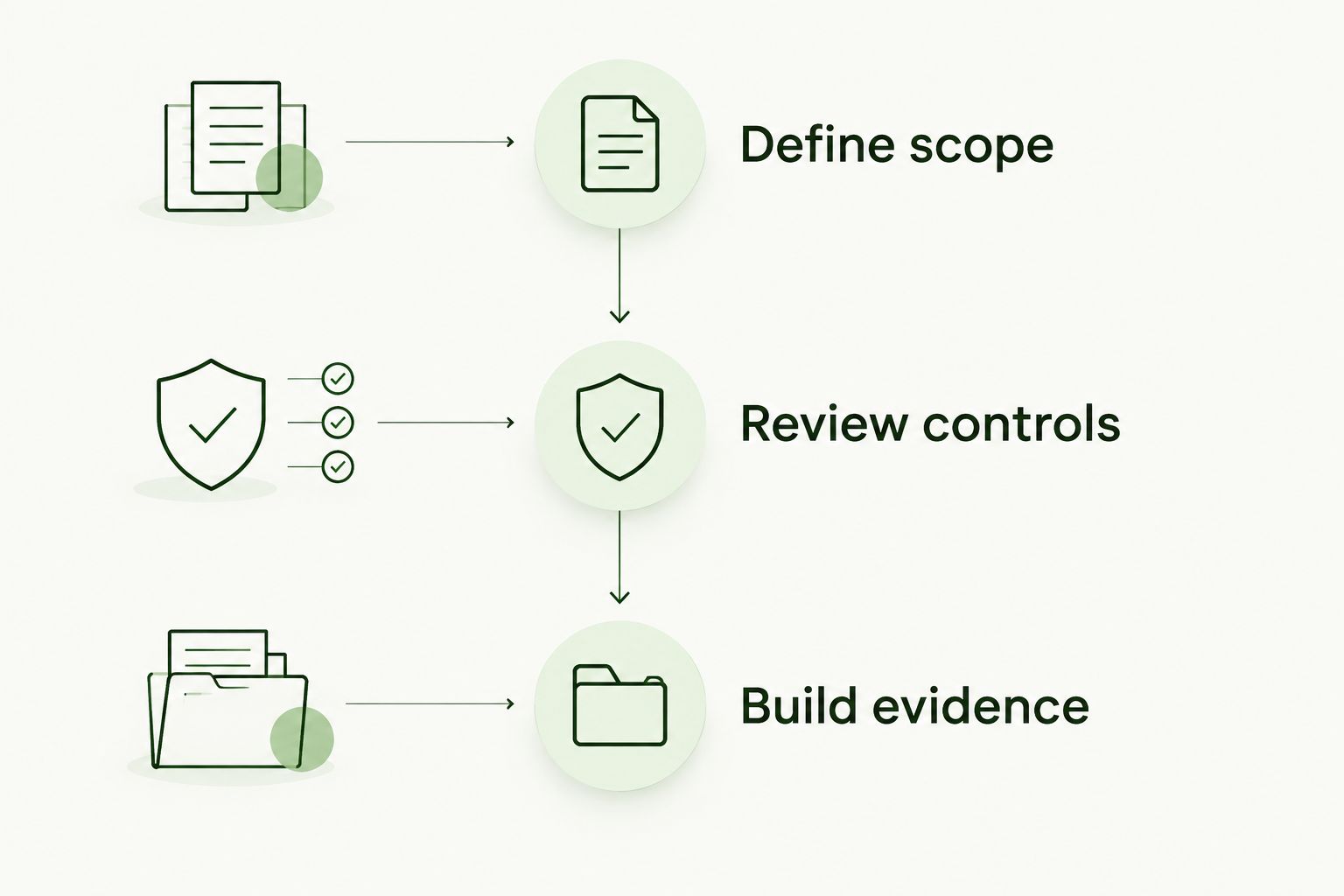
Start with the source definition, then connect the claim to controls and evidence.
What should your client report measure instead of blame?
Report on work your client can inspect and act on. External breach research establishes context; client records establish what happened inside the service you manage.
Keep the reporting categories distinct:
- Coverage: Which users and organizations belong in the training program?
- Participation: Who received and completed the assigned activities?
- Reporting: Do employees know the approved route for suspicious messages or requests?
- Remediation: Which identified gaps have an owner and a documented next action?
- Control review: Which issues require technical or business-process changes rather than more training?
Do not convert completion into a claim of breach prevention. Likewise, a simulation result is evidence about that exercise, not a complete judgment of an employee’s competence or care.
For your 2026 service review, show the distinction between activity and outcome on the same page. Your client should be able to see what was delivered, what remains unresolved, and who acts next.
Where white-label training fits—and where it stops
Defend Wise is best for MSPs seeking white-label security awareness training without per-seat licensing. Its flat-fee, unlimited-seat model removes per-seat licensing from the platform’s economic structure.
That is a procurement and service-packaging distinction, not a claim that software prevents every human-involved breach. A platform does not replace access controls, incident response, or a business-approved procedure for verifying sensitive requests.
The practical advantage is alignment with an MSP-delivered training service. The boundary is equally important: you still need to define client scope, assign responsibilities, and decide what evidence each engagement requires.
Before choosing a platform, ask for a demonstration of the workflows your service depends on. Verify subclient administration, reporting, evidence handling, and any required integrations rather than assuming them from a category label.
Does human involvement mean training would prevent every breach?
No—the 68% human-involvement figure does not measure the preventable share of breaches or the effectiveness of training. Training belongs alongside authentication, access restrictions, verification procedures, and incident response, not in place of them.
Can I present the 68% figure as a current negligence rate?
No—the 68% figure is a finding from Verizon’s 2024 report about non-malicious human involvement. In a 2026 presentation, retain that publication year and definition rather than relabeling it as a current employee negligence rate.
FAQ
What percentage of data breaches are caused by employee negligence?
The cited evidence does not establish a single employee-negligence percentage. Verizon’s 2024 DBIR reported that 68% of breaches involved a non-malicious human element, which is a different measure.
Does the 68% human-element statistic mean employees are at fault?
No, the 68% statistic does not establish employee fault. It includes people falling victim to social engineering or making errors, without determining negligence in each case.
What is the difference between human error and negligence in a breach?
Human error describes a mistake; negligence concerns a failure to meet an applicable standard of care. A mistake alone does not establish that standard or prove it was breached.
How many breaches did Verizon analyze for the cited findings?
Verizon’s 2024 DBIR analyzed 10,626 confirmed breaches within 30,458 security incidents across 94 countries. Those figures describe the report’s dataset, not every incident worldwide.
Can security awareness training replace technical controls?
No, security awareness training does not replace technical controls. Combine behavior-focused work with authentication, appropriate access, verification procedures, and incident response.
Is Defend Wise a fit for an MSP training service?
Defend Wise fits MSPs seeking a flat-fee, white-label security awareness training platform with unlimited seats. Evaluate the workflows your service requires rather than treating the licensing model as evidence of security effectiveness.
How should I cite historical breach research in a 2026 report?
Name the original publication year, report, and measured category. Present Verizon’s 2024 finding as historical evidence of non-malicious human involvement, not as a newly measured negligence rate.
One last thing
Before you reuse a breach statistic, replace its subject with the exact category the source measured. If your sentence changes from “employees caused” to “breaches involved a non-malicious human element,” you have corrected more than wording—you have changed the decision the statistic supports.
Use breach research to prioritize controls, not to assign blame. The next useful question is not who looks careless in a headline; it is which workflow, safeguard, or reporting gap your client will fix.