Do employees with perfect scores still need retraining?
Do top performers need phishing retraining? Yes, when evidence warrants it. Learn when to assign targeted practice, refreshers, or corrective training.
DefendWise
DefendWise
Yes—employees with perfect scores still need ongoing phishing training, but a perfect score alone does not justify repeating the same remedial course. Use current behavior, assessment coverage, and client policy to decide whether someone needs targeted retraining, a short refresher, or continued practice. A 100% quiz score proves success on that assessment, not immunity to a different phishing attempt.
TL;DR
- Do top performers need phishing retraining? Yes when behavior or policy warrants it—not simply because another course is scheduled.
- A perfect quiz score does not establish how an employee will handle an unfamiliar suspicious message.
- Separate routine phishing practice from corrective retraining; assign remediation to the behavior that needs correction.
- Defend Wise offers MSPs white-label security awareness training; assess the training plan separately from the billing model.
Do employees with perfect scores still need retraining?
Perfect scores should change the training assignment, not automatically end training. Keep successful employees in the awareness program. Reserve corrective retraining for an observed mistake, an untested skill, or an applicable policy requirement.
Start by identifying what the score measures. A knowledge quiz, a phishing simulation, and a reporting exercise answer different questions. Treating them as interchangeable creates the wrong training decision.
| Evidence or training option | Best for | What it establishes | Limitation |
|---|---|---|---|
| Knowledge quiz | Checking understanding | Whether someone answered the assessed questions correctly | Does not establish behavior in an inbox |
| Phishing simulation | Practicing message recognition | What happened during a particular simulated scenario | Does not cover every possible attack |
| Reporting exercise | Checking the reporting process | Whether someone can use the designated reporting route | Does not establish every recognition skill |
| Targeted retraining | Correcting an identified gap | Whether the employee understands the corrective lesson | Repeating familiar material does not test unfamiliar situations |
| Routine refresher | Maintaining shared expectations | Whether current guidance has been presented and assessed | Completion alone is not evidence of every required behavior |
The distinction matters for MSPs managing multiple end-client organizations. A training assignment needs an operational reason: maintain a skill, address a gap, communicate a change, or satisfy a documented requirement. A score should inform that reason, not replace it.
Why this matters
In 2026, your client-service standard should distinguish learning evidence from completion evidence. A completed course records an activity. A correct response to a scenario records performance within that scenario; neither is a universal declaration that an employee is safe.
Defend Wise is best for MSPs seeking white-label security awareness training without per-seat billing. Its flat-fee, unlimited-seat model removes seat-based billing from the coverage decision. That commercial benefit does not determine who needs remediation or replace an MSP's responsibility to define training rules.
Keep those decisions separate. Choose the platform around the service model, then choose employee assignments around the evidence. An unlimited-seat arrangement is not a reason to assign everyone every course.
Perfect quiz scores: continue practice, skip automatic remediation
A 100% score deserves a precise interpretation: the employee answered all scored questions correctly. It does not tell you whether the questions were unfamiliar, whether the exercise covered reporting, or whether the employee can apply the lesson to a different request.
Do not punish demonstrated understanding with an automatic repeat of the same material. First inspect the assessment's scope. If the questions only covered suspicious links, the score does not answer a separate question about verifying a request to change payment details.
For your 2026 training plan, distinguish a new learning objective from a repeated assignment. A new scenario can test application without treating the employee as someone who failed. Describe the purpose plainly: practice a different situation, learn a changed process, or confirm a skill that was not previously assessed.
The advantage is a clear connection between the assignment and its purpose. The limitation is that a lighter assignment still requires evidence: record what it covered and how the employee responded.
Strong simulation results: keep testing different situations
An employee who handles a simulated phishing message correctly has demonstrated a useful behavior in that exercise. Keep that result. Do not stretch it into a claim about every message the employee will encounter.
No recorded click is not the same as a verified correct response. Review what the exercise actually captured. An employee might report the message, delete it, leave it unread, or take another action; a click result by itself does not distinguish those outcomes.
Use different situations to assess different decisions. A suspicious attachment and a request to change banking information call for different checks. The goal is not to make a successful employee fail; it is to establish whether the relevant response is understood.
This approach supports focused practice rather than repetitive remediation. Its limitation is equally clear: simulated behavior remains evidence from a simulation, not proof of how every real incident will unfold.
A new mistake: assign targeted retraining
A previous perfect score does not cancel a later observed mistake. If an employee submits credentials during an authorized exercise or bypasses a required verification step, address that specific behavior.
Start with the decision, not the employee's ranking. Establish what happened, which instruction applied, and whether the employee understood the expected action. An unclear reporting route or ambiguous internal procedure needs a process correction as well as any employee coaching.
Then assign the smallest lesson that adequately addresses the gap. Follow it with a relevant check of understanding or practice opportunity. Record both the original issue and the follow-up result so the client can distinguish an assigned task from a completed corrective action.
Targeted retraining gives the assignment a clear purpose. It also has a boundary: correcting one behavior does not establish competence across unrelated topics.
Policy-required refreshers: follow the applicable requirement
A perfect score does not override an employer's documented training requirement. Read the actual policy, contract, or applicable framework before granting an exemption. Do not infer an exemption from performance if the requirement does not provide one.
For 2026 client reviews, distinguish what is mandatory from what the MSP recommends. If a client requires recurring awareness training, record completion against that requirement. If the client permits equivalent assessments or role-based alternatives, document the basis for using them.
The benefit of a shared refresher is consistent communication of current expectations. The drawback is unnecessary repetition when the content and assignment are disconnected from the employee's needs. Improve the content or assignment rules without silently disregarding the requirement.
Do not present a particular training schedule as universally required. The applicable obligation determines the schedule—not a generic claim that every employee needs the same course at the same interval.
Why retraining needs vary
The relevant factors are the evidence you have and the requirement you need to meet. Use these factors to explain an assignment to the employee and the client:
- Assessment coverage: Identify which skills the assessment tested and which remain unassessed. A strong score cannot answer questions outside that scope.
- Observed behavior: Separate answering a question correctly from reporting a message, verifying a request, or following an escalation procedure.
- Current responsibilities: Match practice to the actions the employee is authorized to take, such as approving payments or handling account-access requests.
- Process changes: Teach a changed reporting route or verification procedure even when the employee understood the previous version.
- Documented requirements: Check whether the client's policy or applicable obligation requires a refresher regardless of previous scores.
Avoid ranking employees on a single result and treating that ranking as permanent. An assignment decision should explain what is needed now. It should not become a label that follows someone indefinitely.
How should an MSP decide what to assign?
Use the same decision sequence across subclients, while preserving each client's requirements. Consistent logic does not mean identical content for everyone.
- Check the requirement. Identify the client's mandatory training obligations and any permitted alternatives before considering exemptions.
- Read the evidence. Review the assessment scope and recorded actions rather than relying only on a headline score.
- Identify the gap. Name the specific behavior or knowledge area that needs attention. If no gap is established, do not call the assignment remediation.
- Choose the response. Assign targeted correction, a routine refresher, or continued practice according to the finding.
- Record the outcome. Preserve the assignment reason, completion evidence, and relevant follow-up result for the correct client organization.
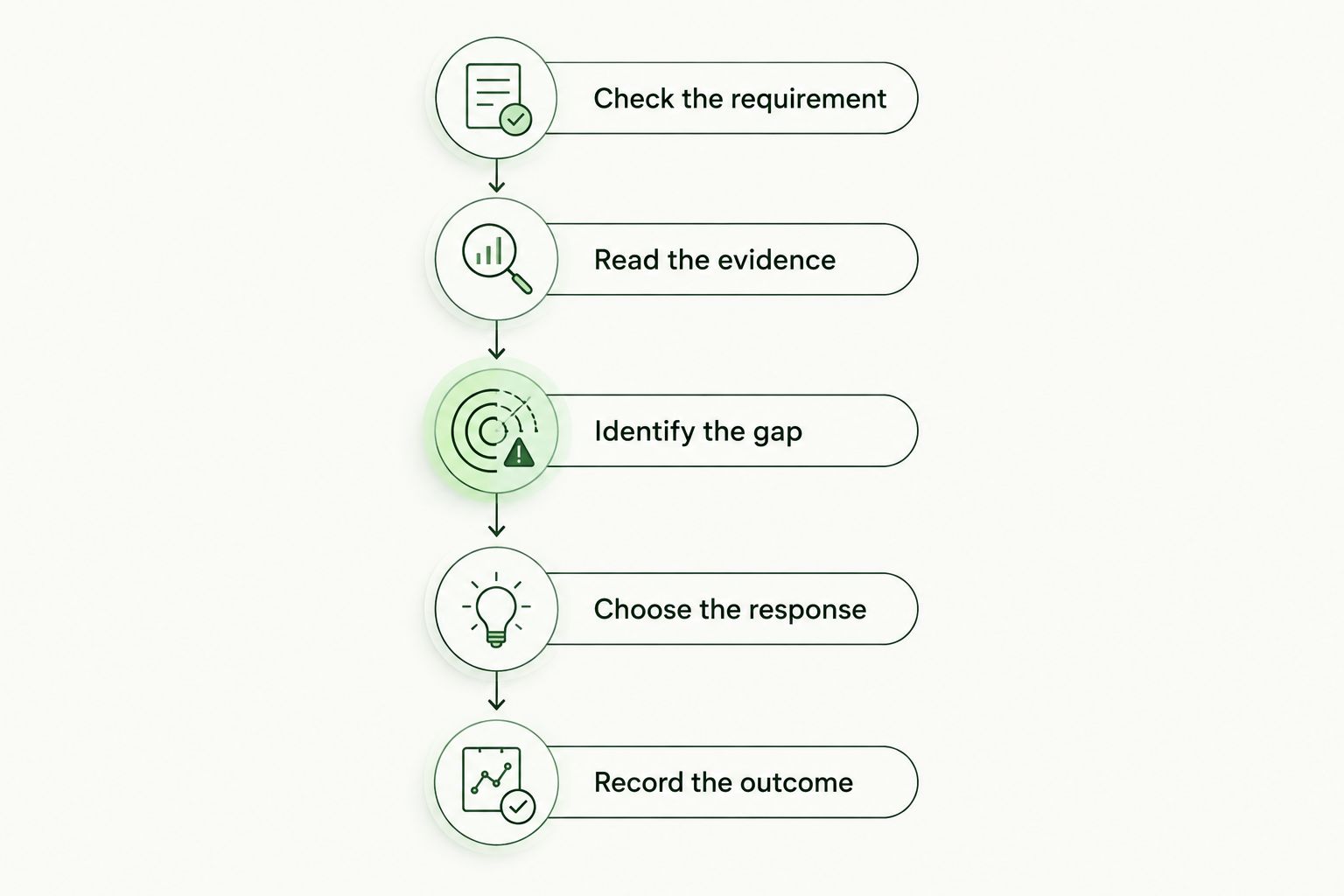
Choose the training response after identifying the requirement and the specific gap.
Make the decision understandable without a dashboard walkthrough. Your client-facing record should explain why a successful employee received another assignment—or why the employee continued with practice instead of corrective training.
For the 2026 service review, show the rule alongside the result. An unexplained completion percentage leaves the client to guess whether everyone received suitable training. A documented assignment reason explains the service decision without claiming that training eliminates phishing risk.
What evidence should you keep for a top performer?
Keep enough context to make the result interpretable. A score without the assessment name or subject is difficult to use when someone asks what the employee actually demonstrated.
Your record should distinguish:
- The subject and scope of the assessment.
- The employee's recorded result or action.
- The applicable client training requirement.
- The reason for the next assignment or permitted exemption.
- The outcome of any corrective follow-up.
Do not turn those records into unsupported compliance assurances. They document training activity and observed performance. Whether that evidence satisfies a particular obligation depends on the obligation itself.
For MSPs, also keep the client boundary clear. A result needs to belong to the correct organization, employee, and assignment. Useful evidence answers a client's question directly; it does not require combining unrelated records and assuming they mean the same thing.
Should a perfect score exempt someone from phishing simulations?
A 100% score should not automatically exempt an employee from phishing simulations because the score only covers its assessment. Check whether the simulation would assess a different behavior and whether the client's requirements permit an exemption.
Is a failed simulation enough to repeat the entire course?
A failed simulation does not automatically justify repeating an entire course. Identify the error first, then choose corrective training that addresses it; repeat broader material when the findings or applicable requirements support that decision.
Can you reduce training for consistently successful employees?
Consistent success can support a more focused assignment when client requirements allow it. Keep the distinction explicit: reducing repetitive remediation is different from removing the employee from the awareness program.
FAQ
Do top performers need phishing retraining?
Top performers need targeted phishing retraining when an observed gap or applicable requirement warrants it. A perfect score alone does not justify repeating the same remedial lesson.
Does a perfect phishing quiz score mean an employee is safe?
A perfect phishing quiz score establishes success on that quiz, not immunity to phishing. Use relevant behavioral evidence and assessment scope to decide what the employee should practice next.
Should employees who never click simulated phishing links skip training?
Employees who never click simulated phishing links should not automatically skip training. A no-click result does not by itself establish whether the employee recognized, reported, ignored, or never reviewed the message.
What's the best retraining for someone who usually performs well?
Targeted retraining is the best fit when you have identified a specific gap in an otherwise successful employee's performance. Match the lesson and follow-up check to that gap rather than assigning unrelated material.
How often should high-scoring employees repeat phishing training?
Set the schedule from applicable requirements, assessment findings, and changes to the employee's responsibilities or procedures. A high score alone does not establish a universal refresher interval.
Is deleting a phishing message as good as reporting it?
Deleting and reporting demonstrate different actions. Assess the employee against the organization's documented instructions, including whether reporting through a designated route is required.
Can an MSP use Defend Wise for white-label security awareness training?
Defend Wise provides a white-label security awareness training platform for MSPs with a flat-fee, unlimited-seat model. Choose employee training assignments from client requirements and observed needs, not from the absence of seat-based charges.
One last thing
Do not make a successful employee repeat a lesson until you can explain what the repetition is supposed to change. If the answer is a policy requirement, say so. If the answer is a specific skill gap, name it.
The practical recommendation for 2026 is simple: keep top performers in the program, remove unjustified remedial repetition, and preserve the evidence behind each decision. A perfect score is useful evidence. It is not a permanent exemption—and it is not a reason to ignore what the employee already knows.