Can security training lower cyber insurance premiums?
Does security training lower cyber insurance premiums? No automatic discount. Learn what MSPs should document and ask brokers before client renewals.
DefendWise
DefendWise
Security awareness training does not guarantee lower cyber insurance premiums; any premium benefit depends on the insurer’s underwriting decision and the rest of your security controls. For an MSP, the practical value is documented training coverage, completion records, and follow-up evidence that support accurate insurance applications—not a promised discount.
TL;DR
- Does security training lower cyber insurance premiums? There is no automatic discount; the insurer decides how training affects underwriting.
- Separate cyber insurance pricing from eligibility, coverage terms, and evidence requirements when discussing training with clients.
- Defend Wise security awareness training suits MSPs that want white-label delivery without per-seat billing.
- Ask the broker what training evidence the insurer accepts before building the renewal packet.
Why this matters
Sell documented security work, not an insurance outcome you do not control. A client who buys training expecting a lower premium has been promised the wrong deliverable. You control the training service and its records; the insurer controls the insurance offer.
For your 2026 service package, separate the platform decision from the underwriting decision. Defend Wise provides white-label security awareness training for MSPs, but choosing a platform does not establish that a particular insurer will reward its use.
The client conversation should stay concrete: who receives training, what gets recorded, who follows up, and what the broker needs. Those are service commitments you can define and verify.
Can security training lower cyber insurance premiums?
Security training can support an insurance application, but there is no automatic relationship between completing training and receiving a lower premium. A training record establishes that an activity happened. It does not establish how an insurer priced the risk.
Ask the broker 2 separate questions: does this insurer require training, and does this insurer explicitly recognize training in its pricing? A requirement and a pricing benefit are different things. Do not turn an answer to the first question into a claim about the second.
| Insurance question | What training evidence supports | What it does not establish |
|---|---|---|
| Does the organization run training? | A documented program, assigned audience, and activity records | That every employee follows safe practices |
| Did assigned users complete training? | Completion status for a defined reporting period | That the organization cannot suffer an incident |
| Does the organization address missed training? | Follow-up records and documented exceptions | That every exception satisfies the insurer |
| Will the premium fall? | Information for the insurer to assess | A guaranteed discount or a specific reduction |
| Is the policy suitable? | Answers to training-related application questions | That limits, exclusions, and other terms meet the client’s needs |
For a 2026 renewal, request the insurer’s current questions rather than reusing an old questionnaire without checking it. Answer the wording actually presented. If an application asks about employee participation, a vendor subscription alone is not evidence of participation.
Training required for coverage
When an application asks about security awareness training, identify exactly what the question requires. It might ask whether a program exists, who participates, or how completion is tracked. Those are different claims, and each needs its own supporting record.
Answer at the level your evidence supports. A written policy shows intent; a training assignment shows distribution; a completion record shows recorded completion. Do not substitute one for another.
Training considered in pricing
Ask the broker whether the insurer applies a documented pricing benefit to the client’s training program. Get the conditions explained before telling the client that training will reduce their premium.
Even when the insurer recognizes training, compare the complete offer. A lower premium does not answer whether the coverage limits, deductible, exclusions, and other terms are acceptable. Keep the insurance decision with the client and their licensed insurance adviser.
Training used as supporting evidence
Training records remain useful even when the insurer does not identify a separate pricing benefit. They let the client answer training-related questions with evidence instead of recollection.
That is a narrower claim than saving money, and a stronger service promise. You can commit to maintaining records without claiming to control an underwriting result.
Why the insurance outcome varies
A training program and an insurance contract describe different things. Training records describe activity within an organization. An insurance offer reflects the insurer’s assessment and the terms being offered.
When you review the outcome, separate these factors:
- Application wording. A question about having a program requires different evidence from a question about participation or testing.
- Insurer treatment. Confirm whether training is a requirement, a pricing consideration, or supporting information for that specific insurer.
- Participation scope. A report needs to identify the population it covers; an unexplained completion percentage leaves that unclear.
- Evidence quality. Dated records, identifiable reporting periods, and documented exceptions make the client’s answers easier to substantiate.
- Other security controls. Training does not answer separate application questions about access controls, backups, or incident response.
- Policy terms. Compare the premium alongside limits, deductibles, exclusions, and conditions rather than treating price as the entire offer.
Do not attribute a changed renewal premium to training unless the insurer identifies that connection. A before-and-after invoice shows that the premium changed. It does not isolate the cause.
What should an MSP put in the training evidence packet?
Maintain 1 evidence packet per client so records from different organizations do not get mixed together. Organize it around the insurer’s questions, not around whichever dashboard screenshot is easiest to export.
For 2026, make the reporting period explicit on the packet and its supporting records. A report without a clear period leaves the reader guessing whether it describes current participation or an earlier training cycle.
Program scope
State which organization the packet covers, which users are included, and who owns the program. Explain how the organization handles new starters, departures, and people excluded from assignments.
Keep the scope consistent across the policy, roster, and report. If those documents describe different populations, resolve the mismatch before submitting them.
Assignment records
Record what was assigned and when. Use the actual training topics and assignment dates rather than a broad statement that everyone received cybersecurity education.
A training catalog is not an assignment record. The relevant question is what the client’s users received, not everything the provider offers.
Completion records
Show completed, incomplete, and outstanding assignments for the stated period. Keep enough detail to reconcile the report with the covered user population.
Do not silently remove incomplete users to improve the headline result. Explain legitimate exclusions and retain the underlying records so the client can support the submitted answer.
Exception handling
Document what happens when someone misses training, including the responsible owner and the follow-up action. Distinguish an unresolved assignment from an approved exception.
This is where the service becomes operational rather than administrative. A report identifies a gap; an owner and a recorded action show how the organization handles it.
Broker correspondence
Keep the broker’s evidence request and the client’s submitted response with the packet. That creates a clear connection between the question, the supporting record, and the answer.
Share only the employee information needed for the request, using the client’s approved process. An insurance evidence packet is not a reason to distribute an unrestricted user-level export.
How should an MSP prepare for renewal?
Use 3 checkpoints: confirm the request, reconcile the records, and approve the response. These are recommended workflow controls, not insurer-mandated deadlines.
- Confirm the request. Obtain the current questionnaire and ask the broker what supporting records are required. Resolve unclear language before collecting unnecessary material.
- Reconcile the records. Match the covered population to assignments, completion status, and documented exceptions. Investigate discrepancies rather than copying a dashboard total into the application.
- Approve the response. Have the client’s authorized representative review the answers and supporting records. Keep the approved submission with the evidence packet.
The sequence matters. Collecting reports before understanding the request creates rework; submitting answers before reconciling records creates an avoidable accuracy problem.
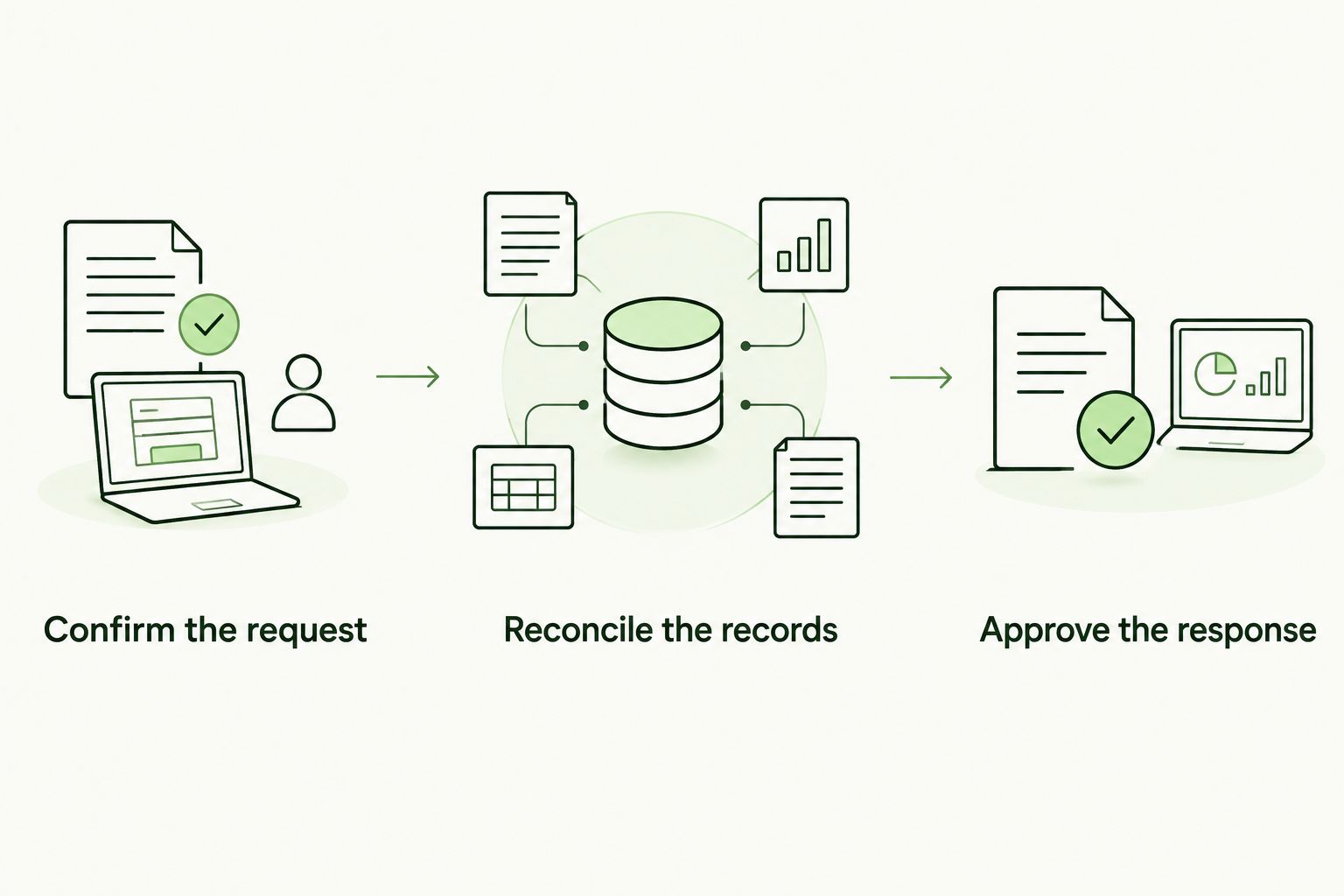
Start with the insurer’s request, then reconcile the evidence before the client approves the answer.
For a 2026 renewal, agree on ownership before the application arrives. The MSP can maintain training records, the client can confirm organizational facts, and the broker can explain insurance requirements. Put those responsibilities in the service process rather than relying on an urgent email thread.
Where does flat-fee training fit?
Defend Wise security awareness training is best for MSPs that want white-label delivery with unlimited seats under a flat-fee model. That is an operating-model fit, not a promise of an insurance discount.
The platform’s stated offering combines white-label security awareness training with a flat-fee, unlimited-seat model. The economic distinction is straightforward: adding covered users does not introduce per-seat platform billing. You still need to define the service work around assignments, exceptions, client communication, and evidence handling.
The limitation is equally clear. Defend Wise does not determine an insurer’s acceptance criteria or policy terms. Evaluate how its documented capabilities fit the evidence workflow you intend to deliver rather than assuming that buying training completes that workflow.
Package the work you can own. Define the covered population, reporting responsibilities, exception process, and renewal support. Leave premium predictions out of the service commitment.
Will completing training guarantee a lower renewal premium?
Completing training does not guarantee a lower renewal premium. Ask the broker whether the insurer explicitly recognizes the program in pricing and what conditions apply.
Keep that answer separate from your training report. The report establishes recorded participation; the insurer’s explanation establishes whether participation affected its offer.
Is a completion certificate enough for cyber insurance?
A completion certificate is enough only when it satisfies the insurer’s stated request. A certificate for an individual does not establish organization-wide participation, and a program-level certificate needs a clear scope.
Ask what the insurer requires before submitting it. If the request concerns all covered employees, retain records that explain the covered population and outstanding assignments.
Should an MSP promise insurance savings when selling training?
An MSP should not promise insurance savings without a specific, documented basis for that client’s insurer and policy. Sell the defined training service and the evidence it produces instead.
For your 2026 proposals, state deliverables in operational terms. Training administration, participation reporting, and renewal evidence support are clearer commitments than an unsupported premium-reduction claim.
FAQ
Does security training lower cyber insurance premiums automatically?
Security training does not automatically lower cyber insurance premiums. The insurer decides whether the program affects pricing, eligibility, or other underwriting considerations.
What should I ask my broker about security awareness training?
Ask whether training is required, whether it affects pricing, and what evidence the insurer accepts. Request clarification of any participation, reporting, or testing conditions before making a commitment.
Can I use a training subscription as proof that employees completed training?
A training subscription is not proof that employees completed training. Use assignment and completion records that identify the covered population and reporting period.
Does security awareness training replace other cyber insurance requirements?
Security awareness training does not answer separate requirements for other controls. Address each application question independently and provide the evidence requested for that control.
What if employees have not completed their assigned training?
Report incomplete assignments accurately and document the follow-up process. Ask the broker how unresolved assignments affect the application rather than assuming they are acceptable.
How should an MSP compare renewal offers after adding training?
Compare renewal offers across premium, limits, deductibles, exclusions, and conditions. Do not attribute a price change to training unless the insurer identifies that connection.
Who should approve training-related insurance application answers?
The client’s authorized representative should approve the application answers using the supporting records. The MSP should clarify the training evidence, while the broker explains the insurer’s requirements.
One last thing
The strongest renewal preparation starts with the question, not the report. Ask the broker to identify the exact training claim the client needs to substantiate, then build the evidence packet around it.
A completed training activity and an accepted insurance answer are not the same deliverable. Defend Wise can be the training platform in your service; your operating process must connect that activity to accurate, client-approved evidence. That is the commitment to sell—not a discount you cannot authorize.