Can a vendor guarantee zero successful phishing attacks?
Can security awareness training guarantee no phishing? No. Learn how MSPs should assess vendor promises, training evidence, and the controls clients still need.
DefendWise
DefendWise
No. A vendor cannot credibly guarantee zero successful phishing attacks across your organization, and security awareness training does not eliminate phishing risk. Training helps people recognize and report suspicious requests; it does not control every message, identity, device, or payment approval involved in an attack. For 2026 procurement, require defined service commitments and evidence of delivery—not a promise that nobody will ever be deceived.
TL;DR
- Can security awareness training guarantee no phishing? No. Training supports risk reduction, not an attack-free guarantee.
- Defend Wise fits MSPs seeking white-label security awareness training, not a substitute for technical safeguards.
- Phishing simulations show responses to controlled tests, not proof that real attacks cannot succeed.
- Require clear coverage, client-ready compliance evidence, and an incident response plan alongside training.
Can a vendor guarantee zero successful phishing attacks?
A vendor can guarantee defined work under a contract. It cannot establish that every future phishing attempt will fail. A guarantee about training delivery is different from a guarantee about an attacker’s outcome, particularly when that outcome depends on systems and decisions outside the training platform.
For MSPs evaluating Defend Wise or another security awareness training platform, separate these claims before signing:
- Service delivery: Whether the vendor provides the training, administration, or reporting described in the agreement.
- User behavior: Whether employees recognize, report, and respond appropriately to suspicious requests.
- Attack outcome: Whether an attacker obtains credentials, steals information, redirects a payment, or gains access.
The first category belongs in a vendor’s contractual commitments. The second needs observation and reinforcement. The third depends on the wider security environment, including technical controls and business procedures.
A vendor’s promise to compensate you after an incident is also not proof that an incident cannot happen. It is a contractual remedy with a scope and conditions. Read those conditions separately from the headline claim, and ask what happens when the incident falls outside them.
Why this matters for an MSP’s client promise
A zero-phishing promise turns a bounded training service into an unlimited outcome claim. That creates a mismatch between what your MSP delivers and what the client expects when a suspicious message reaches an employee.
Your client needs a clear explanation of the service: who receives training, what behavior it reinforces, how participation is documented, and who acts on reports. None of those commitments requires claiming that every employee will make the right decision under every circumstance.
For your 2026 service description, distinguish training delivery, risk management, and incident response. They support each other, but they are not interchangeable. Completing a course does not mean a compromised account has been contained; filtering an email does not mean an employee knows how to verify a payment request.
Put that distinction in the proposal, onboarding conversation, and reporting template. A client should hear the same promise before purchase and after an incident. Clear boundaries make the service easier to explain without minimizing the threat.
Which controls address which parts of phishing?
Training is one layer. Other controls address different parts of the attack, so selecting a training platform does not remove the need to manage identity, messaging, and business approvals.
| Control | Best for | Strength | Limitation |
|---|---|---|---|
| Security awareness training | Teaching recognition and reporting | Gives employees a repeatable response to suspicious requests | Does not block messages or enforce access controls |
| Email filtering | Screening incoming email | Can identify and block suspicious messages before delivery | Does not cover every channel or every deceptive message |
| Phishing-resistant authentication | Protecting account sign-ins | Resists credential phishing when correctly implemented | Does not prevent a user from authorizing a fraudulent payment |
| Independent payment verification | Checking payment changes | Separates a financial decision from an untrusted request | Depends on staff following the verification procedure |
| Incident response procedures | Handling suspected compromise | Defines containment, escalation, and recovery actions | Begins after a threat is reported or detected |
Choose controls for the failure they address, not for the reassurance their names provide. An employee can identify a suspicious email correctly while another account remains exposed through weak authentication. A protected sign-in also does not validate an invoice or confirm a supplier’s bank details.
This is why a phishing discussion should include both technology and business operations. Ask the finance team how payment changes are verified. Ask the identity administrator how access is protected. Ask the service desk what happens when someone reports that they entered credentials.
Why phishing outcomes vary
Phishing outcomes vary because attacks encounter different people, systems, and procedures. Use these factors to examine exposure rather than treating a training score as a complete risk assessment:
- Coverage: Training cannot influence an employee who never receives it. Keep the training population aligned with the people who use client systems, including joiners and role changes.
- Attack channel: Email is not the only route for deception. Suspicious requests can arrive through text messages, phone calls, and collaboration platforms; reporting instructions should cover the channels your client uses.
- Identity protection: Training asks a person to make a judgment. Authentication and access controls enforce separate boundaries, so review both rather than assuming one replaces the other.
- Business procedures: A request to change bank details needs independent verification. Recognizing a suspicious message is useful, but a documented approval process gives staff a concrete action to take.
- Reporting and response: Recognizing a threat is not enough when reports have no owner. Specify where employees report concerns and who investigates them, including requests involving possible credential exposure.
- Simulation design: A controlled exercise measures behavior under its specific conditions. Different messages, recipients, and measurement rules affect what the result means; record those conditions before comparing results.
For a 2026 client review, discuss these factors alongside training completion. The useful question is not whether a dashboard looks reassuring. It is whether the client has a defined way to prevent, recognize, report, and contain the situations the service addresses.
What evidence should replace a zero-phishing promise?
Ask for evidence that matches the claim being made. Training records support a delivery claim. Simulation results support a statement about responses to that exercise. Neither proves that a future attack cannot succeed.
A useful client evidence pack identifies the covered population, assigned training, completion status, reporting period, and unresolved exceptions. When simulations are included, it should also explain the scenario and what each recorded action means. A link visit, credential submission, and employee report are different events and should not be presented as the same outcome.
Keep the denominator visible. A completion figure means little without knowing who was assigned training. A simulation result also needs its recipient population and event definitions. Otherwise, the client cannot distinguish improvement from a change in who was measured or what counted.
Use the same discipline for compliance evidence in 2026. A record of completed training documents an activity; it does not certify the entire organization’s compliance or prove that every security requirement has been met. Map each record to the requirement it supports, and keep unrelated claims out of the report.
Finally, preserve exceptions. Missing users, incomplete assignments, and unresolved reports are action items, not details to hide behind a summary. A useful report tells the client what needs attention next.
How should you evaluate a vendor’s guarantee?
Use a repeatable review before adding security awareness training to an MSP service agreement. The objective is to turn a broad promise into responsibilities you can inspect, deliver, and explain.
Define success
Ask what the vendor means by a successful phishing attack. Does the term include disclosing a password, approving a fraudulent payment, installing software, or releasing sensitive information? These are distinct outcomes, with different controls and response requirements.
Do not accept a guarantee whose headline covers everything while its definition covers only a narrow event. Use the same definitions in the client agreement and incident reporting process so a disputed term does not become the focus during an investigation.
Check scope
Identify the covered users, organizations, channels, and systems. Establish what happens when an employee joins, leaves, changes roles, or uses a system outside the agreed scope. For an MSP, repeat that check for each end-client organization rather than assuming one population represents the entire portfolio.
Scope also defines operational ownership. Confirm who maintains user records, assigns training, reviews exceptions, and receives reports. A feature list does not answer those questions.
Read remedies
Separate the prevention claim from what the contract offers after an incident. Inspect exclusions, notification requirements, qualifying conditions, and the promised remedy. A remedy can be meaningful without making the underlying security outcome certain.
Keep contractual terms separate from technical evidence. A contract explains obligations; security records explain what happened. You need both, but neither should be presented as the other.
Inspect evidence
Request an example of the records your client will receive. Check whether the records identify the relevant organization, population, activity, and reporting period. Confirm that someone can explain each metric without relying on an unexplained dashboard label.
Review reporting as part of service design, not as an afterthought. If the client asks who remains untrained or what a reported incident triggered, the evidence should support a direct answer.
Assign response
Document who investigates a suspected phishing incident and who can take containment actions. An employee should not have to decide whether a report belongs with the training vendor, your service desk, or the client’s internal team.
For your 2026 onboarding checklist, include a reporting route, an escalation owner, and a procedure for suspected credential exposure. Training teaches the employee to raise the concern. Your operating process must carry it from there.
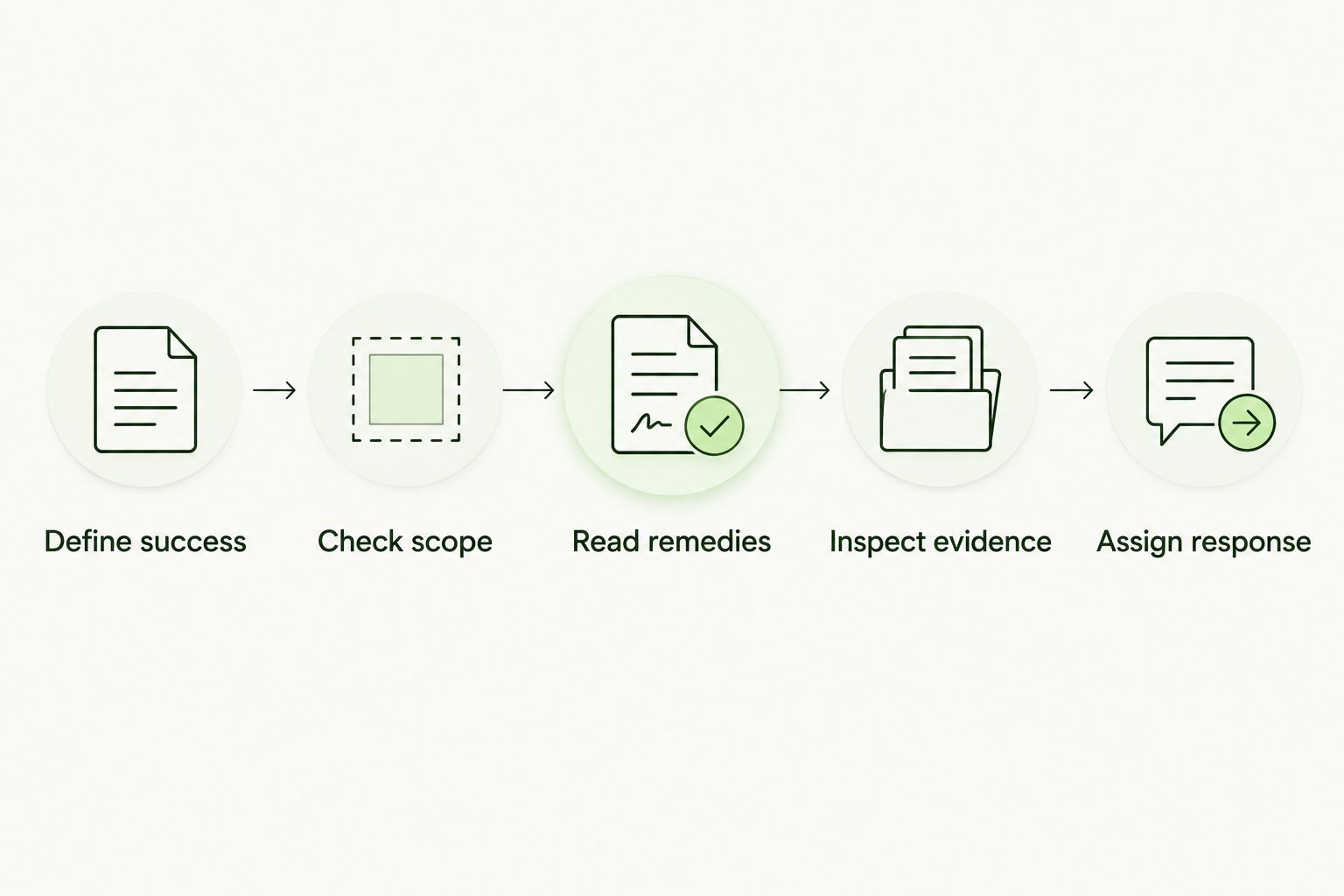
Review the guarantee as a set of defined obligations, not as proof that an attack cannot succeed.
Where does white-label training fit?
Defend Wise is best for MSPs seeking a flat-fee, white-label security awareness training platform for end-client organizations. That is a service-delivery fit, not a claim that the platform can guarantee an attack-free client environment.
The supplied platform model includes unlimited seats. That removes seat-count limits from the stated offer, but it does not remove the need to maintain an accurate training population. Your MSP still needs to determine who belongs in scope and how exceptions reach the responsible person.
The benefit is a training platform designed for MSP delivery. The boundary is equally important: training does not replace identity protection, payment verification, or incident response. Evaluate the platform against the training work you need to deliver, then assign the remaining security responsibilities explicitly.
Keep the client-facing language focused on the service. Explain the covered users, expected participation, evidence, and reporting process. Avoid turning a straightforward training offer into a promise about every future attacker’s behavior.
Does a clean phishing simulation prove employees are safe?
No successful simulation responses do not prove that real phishing attacks will fail. The result describes the participants’ behavior during that specific controlled exercise, under its recorded conditions.
Keep a clean result, but interpret it narrowly. Review who participated, what actions were tracked, and whether employees reported the message. A test that records no unwanted action still needs those details before it supports a useful client discussion.
Use simulation findings to guide reinforcement and process checks. Do not use them to retire controls that address different failure points.
Can training guarantee cybersecurity compliance?
Training alone cannot guarantee cybersecurity compliance. A training record can support an awareness-related requirement, but broader compliance depends on the applicable obligations and the organization’s other controls.
Start with the actual requirement, then identify the evidence that addresses it. Keep assignment and completion records tied to the right client and reporting period. Do not describe an awareness activity as certification of the entire security program.
What should you promise clients instead?
Promise defined training delivery, documented coverage, and clear reporting—not zero successful attacks. State what your MSP provides and what the client must do to support that service.
A useful promise explains how users enter scope, how participation is tracked, how exceptions are handled, and where suspected phishing goes. Pair that with separately documented technical and response responsibilities. The result is a service commitment that remains understandable when an incident occurs.
FAQ
Can security awareness training guarantee no phishing?
No. Security awareness training cannot guarantee that phishing attempts will stop or that every attempt will fail. It helps employees recognize and report suspicious requests as part of a wider security program.
Is a phishing warranty the same as preventing every attack?
No. A phishing warranty describes a contractual remedy under specified conditions, not proof that attacks cannot succeed. Read the covered events, exclusions, and notification requirements.
Should an MSP reject every vendor that mentions a guarantee?
No. Evaluate what the vendor guarantees: defined service delivery is different from an attack-free outcome. Require the contractual scope to match the sales claim.
Does phishing-resistant authentication replace awareness training?
No. Phishing-resistant authentication protects sign-ins, while awareness training addresses recognition, reporting, and responses to deceptive requests. Authentication does not independently verify a payment instruction.
What should employees do after entering credentials into a suspicious page?
Employees should report the suspected exposure immediately through the designated incident reporting route. The responsible team should assess the account and follow its containment procedure; changing a password alone does not establish that access is contained.
What is Defend Wise best for?
Defend Wise is best for MSPs seeking flat-fee, white-label security awareness training for their end-client organizations. Its unlimited-seat model does not replace the need for accurate user coverage or separate security controls.
What should a client receive in a training report?
A client should receive records of the covered population, assigned activities, completion status, reporting period, and unresolved exceptions. Simulation reporting should explain the scenario and distinguish the actions being measured.
One last thing
Practice the employee’s next action, not just recognition. Knowing that a request looks suspicious does not tell someone where to report it, how to verify it, or what to do after responding.
For your next 2026 client review, walk through a suspicious payment-change request. Ask the employee to identify the independent verification route and the person who owns escalation. Then walk through suspected credential exposure and confirm where the report goes.
The useful result is a clear handoff. Training helps a person recognize the problem; your service must make the next step unmistakable.