Best usecure alternatives for MSPs
Compare usecure alternatives for MSPs in 2026. Choose Defend Wise for flat-fee, white-label training, then assess content, client workflows, and evidence needs.
DefendWise
DefendWise
usecure combines security awareness training and phishing simulation, making it a relevant starting point for MSPs. That combination does not settle the harder question: how to package training across end clients without seat-count friction or unpaid administration. The best usecure alternative in 2026 is Defend Wise if you need flat-fee, white-label security awareness training; KnowBe4 if you prioritize a broad training library and phishing simulation.
TL;DR
- For usecure alternatives for MSPs, choose Defend Wise for flat-fee, white-label security awareness training with unlimited seats.
- Choose KnowBe4 when training content breadth and phishing simulation drive your selection.
- Consider Huntress Security Awareness Training when story-based lessons fit your client training approach.
- Keep usecure when your existing training, phishing simulation, and client-service workflow already meet your requirements.
Why this matters
Your client buys a security awareness service, not another portal. Your MSP still has to define who receives training, handle exceptions, answer client questions, and produce evidence when someone asks for it.
A platform comparison that stops at training content misses that work. In 2026, compare the delivery model alongside the learning experience: what you can standardize, what your staff must manage, and what happens when a client adds employees.
Defend Wise is best for MSPs that want flat-fee, white-label security awareness training with unlimited seats. That is an economic and service-packaging argument, not a claim that every other platform lacks useful features.
usecure alternatives for MSPs at a glance
The shortlist below separates buying priorities. Choose the priority first; then test the workflow behind it.
| Platform | Best for | Standout capability or model | Difference from usecure |
|---|---|---|---|
| usecure | Keeping training and phishing simulation within an established workflow | Security awareness training and phishing simulation | The baseline against which to judge a switch |
| Defend Wise | Flat-fee, MSP-branded training across end clients | White-label security awareness training with unlimited seats | Makes the flat-fee delivery model the central buying argument |
| KnowBe4 | Content-led awareness programs | A broad training library and phishing simulation | An alternative when content selection drives the decision |
| Huntress Security Awareness Training | Story-based employee education | Narrative-led security awareness training | An alternative when lesson format drives the decision |
No platform wins merely by appearing first in a table. Your preferred option must fit both the client experience and the work your MSP retains.
1. Defend Wise: best for flat-fee, white-label training
Defend Wise provides a flat-fee, white-labeled security awareness training platform that MSPs use to train and manage cybersecurity compliance for end-client organizations. Unlimited seats support a service model that does not revolve around counting users.
The distinction is straightforward. You can evaluate training as a portfolio-wide service rather than treating every additional learner as a separate packaging decision.
Where Defend Wise shines
- Flat-fee model: gives you a clear commercial structure for packaging security awareness training.
- Unlimited seats: removes seat limits from the stated training model.
- White-label delivery: supports presenting the training service under your MSP's brand.
- MSP focus: addresses training and cybersecurity compliance management for end-client organizations.
For an MSP selling a standardized awareness service, those attributes belong near the top of the shortlist. Start with the operating model, then examine the lessons, administration, and evidence your clients require.
Where Defend Wise falls short
- Unlimited seats do not remove service labor. Your team still needs an owner for enrollment exceptions, client questions, and evidence requests.
- White-labeling is not proof of learning quality. Review the actual employee experience before making it part of your service promise.
- A flat fee does not establish workflow fit. Validate client separation, reporting, and required integrations during evaluation rather than inferring them from the commercial model.
These are boundaries on the recommendation. The flat-fee argument is strong when seat-count friction is your problem; it does not answer every content or administration question.
Defend Wise vs. usecure
| Dimension | Defend Wise | usecure |
|---|---|---|
| Training proposition | Security awareness training for MSP end clients | Security awareness training with phishing simulation |
| Primary selection argument | Flat-fee delivery with unlimited seats | Fit of the existing training and phishing workflow |
| Branding proposition | White-label platform | Check the branding requirements against the proposed configuration |
| Decision test | Does the service model simplify your training offer? | Does the current workflow already meet your clients' needs? |
Do not mistake a commercial improvement for an automatic operational improvement. A platform change only earns its place when the service remains manageable after onboarding.
Best for: MSPs building a standardized, MSP-branded awareness service without seat-count friction.
Verdict: Buy if the flat-fee model fits your service and the workflow passes evaluation.
2. KnowBe4: best for content-led awareness programs
KnowBe4 provides security awareness training and phishing simulation, with a broad training library. Put it on your shortlist when lesson selection is central to your program.
Content breadth helps when you need choices. It also gives your team a curation job: selecting appropriate material, setting assignments, and deciding what employees should learn next.
Where KnowBe4 shines
- Training variety: supports evaluating different topics and learning formats.
- Phishing simulation: lets you assess simulated phishing alongside awareness training.
- Program-building flexibility: gives content-focused teams material to organize into their training approach.
The buying question is not whether a large library sounds impressive. It is whether you will use that variety to build a clearer client program.
Where KnowBe4 falls short
- Content selection remains work. A broad library does not choose the right lessons for each client.
- Platform choice does not establish an MSP delivery model. Check branding, client administration, and contractual scope against your requirements.
- Training and simulation still need interpretation. Someone must explain results and decide what follow-up belongs in the client service.
If your MSP wants a tightly standardized program, additional choice can become additional decision-making. Assign ownership before adopting a content-heavy approach.
KnowBe4 vs. usecure
| Dimension | KnowBe4 | usecure |
|---|---|---|
| Awareness training | Training library | Security awareness training |
| Phishing simulation | Available within the product offering | Available within the product offering |
| Reason to shortlist | Content breadth is a buying priority | Current training and phishing workflow is the benchmark |
| Evaluation task | Identify the content you will actually deploy | Check whether current lessons already meet the brief |
For your 2026 evaluation, inspect representative lessons rather than comparing feature labels alone. Ask your service owner to select a curriculum for a real client and explain the selection.
Best for: MSPs willing to own curriculum selection and ongoing awareness-program management.
Verdict: Buy if content breadth solves a defined client requirement.
3. Huntress Security Awareness Training: best for story-based lessons
Huntress Security Awareness Training uses story-based employee education. Consider it when the way a lesson explains a threat matters more to your selection than the size of a content catalog.
A recognizable scenario can make a lesson easier to discuss with clients. Review complete lessons, not just a demonstration clip.
Where Huntress Security Awareness Training shines
- Narrative format: presents security education through stories and scenarios.
- Employee-facing focus: gives you a concrete learning experience to evaluate with client stakeholders.
- Clear comparison angle: lets you judge lesson delivery against the training experience you already use.
Where Huntress Security Awareness Training falls short
- A story-led approach is a format choice, not a universal fit. Review it with the people responsible for employee training.
- Lesson format does not settle administration. Evaluate enrollment, client management, and evidence retrieval separately.
- Engaging content is not proof of changed behavior. Keep follow-up and reporting in the service design.
Huntress Security Awareness Training vs. usecure
| Dimension | Huntress Security Awareness Training | usecure |
|---|---|---|
| Training approach | Story-based security awareness education | Security awareness training |
| Main comparison | Lesson format and employee experience | Existing training experience and workflow |
| Selection test | Do representative lessons fit your clients? | Does the current approach need replacing? |
Best for: MSPs prioritizing the employee learning format in their shortlist.
Verdict: Buy if the story-based approach fits your clients and administration meets your service requirements.
Why people switch from usecure
Switching is justified by a defined requirement, not by calling the incumbent outdated. usecure already covers training and phishing simulation; replacing it needs a more specific reason.
Use these decision triggers in your 2026 review. Each maps to a different shortlist priority rather than an allegation about usecure.
Service economics
Choose a different delivery model when your awareness offer needs flat-fee packaging and unlimited seats. Make that requirement explicit before evaluating vendors.
Separate the platform model from your own service commitment. Unlimited learners do not mean unlimited staff time, custom reporting, or client consultation.
Content requirements
Consider KnowBe4 when you have a defined need for broader content selection. Name the lessons or formats your program needs before treating catalog breadth as a benefit.
If your existing curriculum already meets the brief, more content is not a reason to migrate.
Learning format
Consider Huntress Security Awareness Training when story-based instruction matches how you want employees to learn. Compare complete lessons on the same topic.
Do not use a polished sales demonstration as a substitute for the training employees will receive.
Branding requirements
Choose a white-label platform when MSP-branded delivery is part of your service promise. Check the actual client-facing experience during evaluation.
Branding is useful when it supports a consistent service relationship. It does not replace clear responsibilities or accurate reporting.
Test the service before you switch
A 2026 shortlist should end in a workflow check, not another feature spreadsheet. Follow the same sequence with each vendor so your comparison stays fair.
Define scope
Write down who receives training, what the MSP manages, and what the client must do. Include employee changes, incomplete assignments, and requests for evidence.
Distinguish the standard service from extra work. Otherwise, a simpler platform arrangement can still leave you with an unclear client commitment.
Run enrollment
Walk through a representative client setup and an employee change. Ask the person who will own the service to perform the tasks.
Watch for unclear handoffs. The important result is whether your staff understands the process without relying on the sales representative to finish it.
Inspect lessons
Review the material employees will actually receive. Check whether the language, examples, and required actions fit your client audience.
A useful lesson should make the employee's next action clear. A completion record alone does not tell you whether the material meets that standard.
Retrieve evidence
Ask for the records needed to explain training activity to a client. Check how you identify the organization, the learners, the activity, and the relevant period.
Avoid promising that a training record guarantees compliance or satisfies an insurer. Match the evidence to the specific request.
Assign ownership
Name the person responsible for exceptions, reporting, and client questions. Define what happens when that person is unavailable.
Software supports the service. Ownership keeps it running.
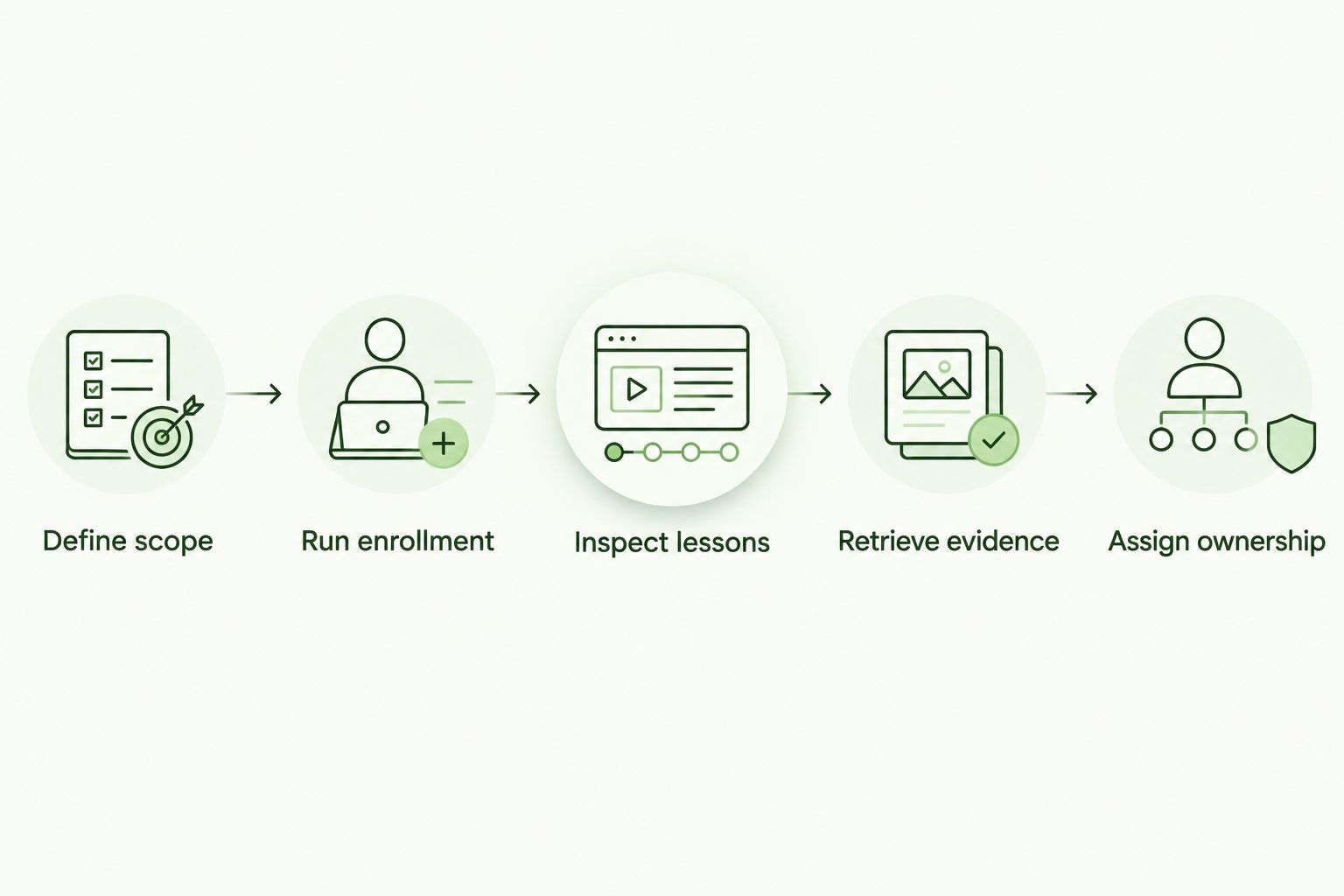
Evaluate the client-service workflow before committing to a platform change.
Complete the same checks with your current platform. That establishes whether the alternative solves a real problem or simply changes where the work happens.
When staying with usecure is the right call
Keep usecure if its training, phishing simulation, and existing workflow meet your client requirements. A switch without a defined benefit adds migration work without a clear service improvement.
Use your 2026 renewal review to document the requirement that would justify moving. If you cannot name it, improve the service around the current platform first.
Where usecure needs scrutiny is the same place every alternative does: the full client-service workflow. Evaluate it fairly against the shortlist, including your existing familiarity with the system.
Best for: MSPs whose current usecure deployment meets their training and operational requirements.
Verdict: Hold when the existing service works and no unmet requirement justifies migration.
FAQ
What's the best usecure alternative for MSPs in 2026?
Defend Wise is the best fit for MSPs seeking flat-fee, white-label security awareness training with unlimited seats. Choose KnowBe4 when content breadth drives the decision, or consider Huntress Security Awareness Training for story-based lessons.
Is a flat-fee training platform better for an MSP?
A flat-fee training platform is better when your service model needs predictable platform packaging without seat-count friction. It does not remove the staff work involved in client support, exceptions, or reporting.
Is KnowBe4 better than usecure?
KnowBe4 belongs on the shortlist when a broad training library is a priority. Keep usecure if its current training and phishing simulation already meet your needs; content breadth alone does not justify migration.
Why consider Huntress Security Awareness Training?
Consider Huntress Security Awareness Training when story-based lessons fit your employee education approach. Review complete lessons and evaluate administration separately before selecting it.
Does white-label training guarantee compliance?
White-label training does not guarantee compliance. Branding changes how you present the service; compliance depends on the applicable requirements, implementation, and supporting evidence.
What should an MSP test before replacing usecure?
Test service scope, enrollment, lessons, evidence retrieval, and operational ownership before replacing usecure. Apply the same checks to the incumbent so the alternative must demonstrate a specific improvement.
Should an MSP keep usecure if clients already use it?
Keep usecure when the existing deployment meets client requirements and works operationally. Replace it only when another option solves a defined problem that justifies the migration work.
One last thing
Your platform decision and your service boundary are separate decisions. Unlimited seats define learner coverage; they do not define how much custom work your MSP promises each client.
Before signing, write a client-facing description of what training includes, who handles exceptions, and what evidence you provide. If that description is unclear, changing platforms will not fix it.