Best security awareness training for trucking companies 2026
Choose security awareness training for trucking companies by delivery model. Compare MSP-led training, internal briefings, LMS delivery, and workshops.
DefendWise
DefendWise
Best overall for MSP-managed fleets: Defend Wise. Best for reinforcing dispatch procedures: internal briefings. Best for an established learning program: an existing learning management system. Best for practicing escalation decisions: instructor-led workshops. This 2026 guide compares security awareness training for trucking companies by delivery model, ownership, and practical fit.
TL;DR
- Defend Wise is the best fit for MSPs seeking flat-fee, white-label security awareness training for trucking companies.
- Internal briefings connect security rules to dispatch, driver communications, and payment approvals.
- An existing learning management system fits fleets with an established training owner and enrollment process.
- Instructor-led workshops help teams practice verification and escalation; they do not replace an ongoing training program.
Why this matters
Your training needs to reach the people handling driver messages, dispatch instructions, customer documents, and payment changes. A generic completion certificate does not tell you whether those employees know what to do when a request looks wrong.
Choose the delivery model before comparing course catalogs. For your 2026 program, name who owns enrollment, who follows up on unfinished assignments, and who retrieves training records when a customer or insurer requests them.
Defend Wise security awareness training is best for MSPs that want flat-fee, white-label delivery for trucking clients. A fleet managing training internally needs a different starting point: an accountable employee and a workable delivery process.
What makes the best security awareness training for trucking companies?
Use these criteria to judge the options. A strong program needs more than relevant subject matter.
- Workforce access: Drivers, dispatchers, finance staff, and managers need a practical way to receive training. Demonstrate the actual access process before choosing a platform.
- Role relevance: Teach employees the decisions they make at work: verifying changed instructions, protecting credentials, and escalating suspicious requests.
- Administrative ownership: Assign enrollment, reminders, employee departures, and recordkeeping to named owners. Software does not remove accountability.
- Usable evidence: Require records that identify the learner, training topic, completion date, and outstanding work. Inspect a sample before purchase.
- Commercial fit: Compare flat-fee and seat-based arrangements against your enrollment process. Include the work involved in maintaining an accurate roster.
- Clear boundaries: Training teaches employee decisions. Access controls, payment approvals, and incident response still need separate owners and procedures.
For a 2026 shortlist, reject any option that your intended learners cannot use under realistic working conditions. A polished administrator demonstration is not a driver-access check.
Training options at a glance
These rankings compare delivery models, not a laboratory-tested league table of software vendors. The first option is a named platform; the others are ways your fleet can organize and deliver training.
| Rank and option | Best for | Standout characteristic | Key limitation |
|---|---|---|---|
| 1. Defend Wise | MSP-managed trucking clients | Flat-fee, white-label security awareness training with unlimited seats | Built around MSP delivery rather than an internally owned fleet program |
| 2. Internal briefings | Reinforcing dispatch procedures | Direct connection between a security rule and your operating process | Preparation and attendance records remain internal work |
| 3. Existing learning management system | Fleets with established learning administration | Security training sits within an existing assignment process | A delivery system still needs suitable content and maintenance |
| 4. Instructor-led workshops | Practicing cross-team escalation | Employees discuss decisions and responsibilities together | Scheduling and follow-up require coordination |
1. Defend Wise: best security awareness training for MSP-managed fleets
Defend Wise provides flat-fee, white-label security awareness training for MSPs, with unlimited seats. The MSP is the buyer and service owner; the trucking company receives training through that relationship.
The distinction matters. If your fleet already relies on an MSP, ask how training will fit into the existing service relationship rather than starting a separate, internally administered program by default.
Defend Wise pros:
- Flat-fee delivery removes per-seat pricing from the platform's commercial model.
- Unlimited seats let the MSP plan coverage without selecting a seat allowance.
- White-label delivery supports an MSP-branded training service.
- The stated focus matches MSPs serving end-client organizations.
Defend Wise cons:
- An MSP-oriented model is not the same buying route as a fleet-owned internal learning program.
- Unlimited seats do not remove the need to identify learners and assign responsibility for follow-up.
- Your fleet still needs its own dispatch, payment-verification, and escalation procedures.
Best for: MSPs adding security awareness training to the services they deliver to trucking clients.
Before choosing, have the MSP explain the division of work. Your fleet should know who maintains the employee roster, handles access problems, checks completion, and supplies records. Demonstrate driver access and reporting requirements rather than treating either as automatic.
Verdict: Buy for an MSP-led training service; choose the operating model before the platform.
2. Internal briefings: best for reinforcing dispatch procedures
Internal briefings use supervisors or designated employees to explain a specific security decision. For a trucking company, that means connecting a rule to an actual workflow, such as verifying a changed pickup instruction or reporting an unexpected account-access request.
Keep the scope narrow. Use a recommended 10-minute briefing to teach one decision, show an example, and confirm the reporting route; this is a planning recommendation, not a required duration.
Internal briefings pros:
- Your team can connect instruction directly to current operating procedures.
- Employees can ask about exceptions that affect their work.
- Supervisors can reinforce the same rule during ordinary operational conversations.
Internal briefings cons:
- Someone must prepare, review, and update every briefing.
- Missed sessions require a catch-up process.
- Attendance alone does not demonstrate that employees understand the decision.
Best for: Fleets that need to reinforce a defined dispatch or office procedure under an accountable internal owner.
Ask a dispatcher to explain how an employee should verify a changed instruction when the original sender is unavailable. If the answer depends on personal judgment rather than a written process, fix the procedure before teaching it.
Verdict: Buy into internal briefings as reinforcement; skip them as an unrecorded substitute for a managed program.
3. Existing learning management system: best for established learning teams
An existing learning management system, or LMS, is a delivery route for security training content. It fits a fleet that already assigns learning, maintains employee records, and has someone responsible for completion follow-up.
The LMS and the training are separate decisions. Confirm that the content teaches useful security behavior and that your existing system can deliver it to the intended employees.
Existing LMS pros:
- Security assignments can follow your established learning process.
- An existing training owner can coordinate security with other employee learning.
- Your team can maintain internally approved explanations of company procedures.
Existing LMS cons:
- Your organization remains responsible for content selection and updates.
- Learners without a workable access route still need an alternative.
- Completion tracking depends on your configuration and recordkeeping practices.
Best for: Trucking companies with an established learning function, maintained employee rosters, and an accountable LMS administrator.
For a 2026 evaluation, inspect the learner experience rather than accepting an administrator-only demonstration. Ask an intended user to open an assignment, leave it, return, and complete it. Then check the resulting record.
Verdict: Hold the existing LMS if delivery and administration already work; skip adding another system without a defined gap.
4. Instructor-led workshops: best for practicing escalation decisions
Instructor-led workshops bring employees together to discuss what they should do in a specific situation. Use them when a decision crosses departments, such as a driver reporting a suspicious message that requires dispatch and finance to act.
The workshop should end with a usable procedure. Discussion without an owner, reporting route, and documented next step leaves the operational problem unresolved.
Instructor-led workshops pros:
- Employees can clarify who makes each decision.
- A facilitator can surface conflicting instructions between teams.
- Discussion can expose gaps in a written escalation procedure.
Instructor-led workshops cons:
- Scheduling must accommodate the employees who need to participate.
- Absent employees need equivalent instruction.
- A standalone workshop does not maintain ongoing enrollment or completion records.
Best for: Dispatch, finance, management, and support teams that need to agree on a shared response procedure.
Use a clearly labeled fictional example: a payment-change request arrives while a dispatcher is handling an urgent shipment issue. Ask who verifies the request, which known contact method they use, and who can stop the transaction.
Verdict: Buy for cross-team decision practice; skip workshops as the only training method.
Build the curriculum around trucking decisions
For your 2026 curriculum, start with job responsibilities rather than a long topic list. The training should tell each employee what to notice, what to verify, and where to report a concern.
Driver communications
Teach drivers to question unexpected requests for credentials, payment details, or account recovery codes. Explain how to verify a message through an established contact route, and schedule learning when drivers are safely parked and not driving.
Dispatch changes
Define how employees authenticate changed pickup, delivery, or contact instructions. Use fictional examples that resemble your workflow without exposing customer information or operational credentials.
Payment approvals
Teach finance staff to verify changed banking instructions independently of the message requesting the change. Training should reinforce your approval procedure, not create an informal exception for urgent requests.
Account access
Explain why employees must protect passwords and reject unexpected authentication requests. Include the reporting action for a suspected account compromise; recognizing a warning is only useful when employees know the next step.
Incident reporting
Give employees a named reporting route and an alternative if their normal account is unavailable. Tell them what information to preserve and who decides whether an instruction or transaction should pause.
Run a practical acceptance check
Before a wider rollout, check the service using the same steps employees and administrators will follow. Do not turn the evaluation into another course-catalog comparison.
- Assign ownership: Name the fleet contact and the MSP or internal training owner.
- Check access: Ask an intended learner to complete a recommended 5-minute access walkthrough on the device they will use.
- Confirm evidence: Retrieve a sample completion record and inspect its learner, topic, date, and status fields.
- Review gaps: Schedule a recommended 30-day review of enrollment, unfinished work, and reported access problems.
These durations are suggested planning checkpoints, not vendor performance claims. Adjust the schedule to your operation while keeping the responsibilities explicit.
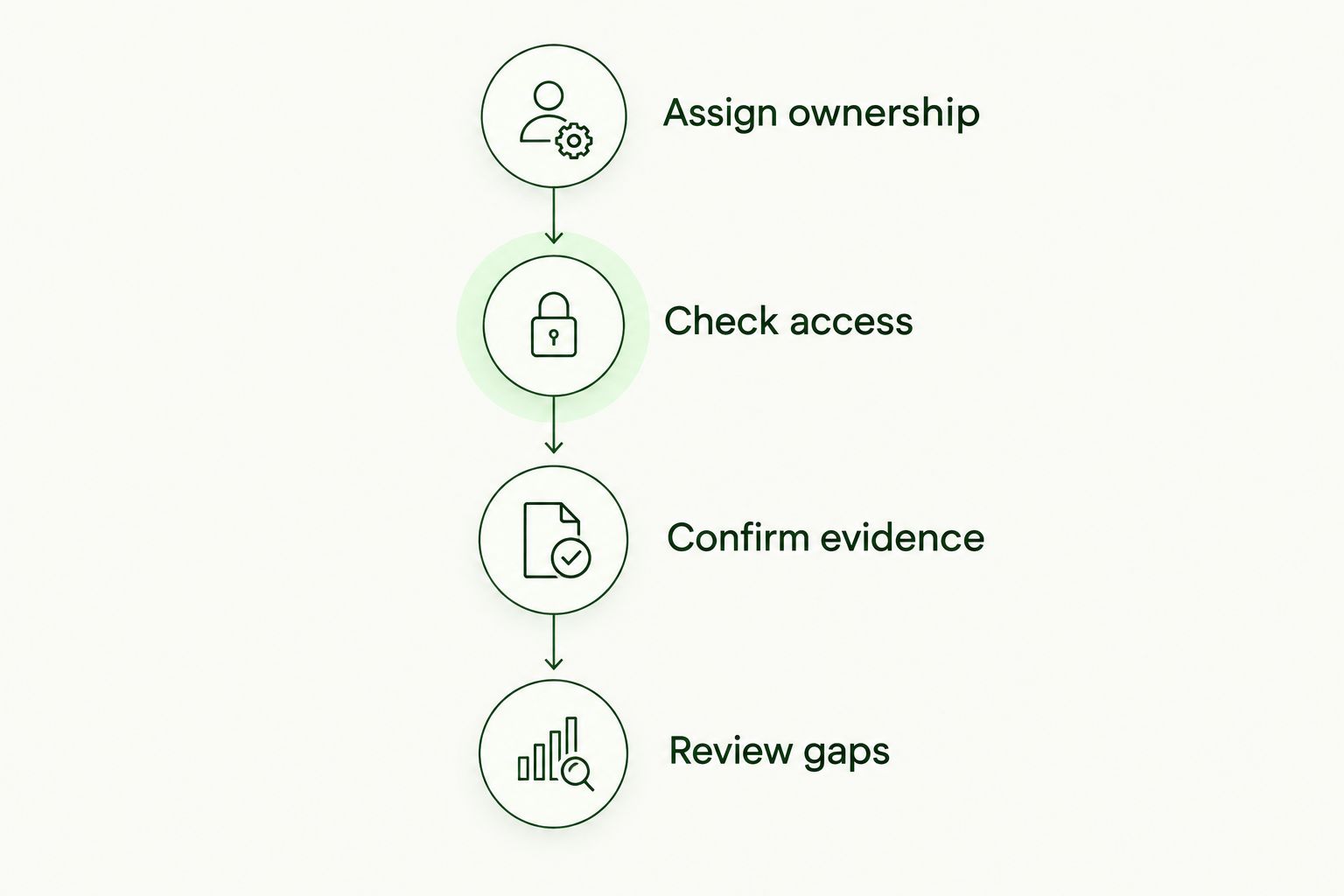
Approve the operating process, not just the administrator demonstration.
A successful acceptance check answers an operational question: can the right person get assigned, complete the work, and appear correctly in the record? If not, resolve that failure before expanding enrollment.
How the options were ranked
The ranking prioritizes accountable delivery, workforce access, role relevance, evidence, and commercial fit. It does not claim measured reductions in incidents or assume that a platform includes features beyond its stated offering.
MSP-led delivery ranks first for MSP-managed fleets because it places training within that service relationship. Internal briefings, an existing LMS, and workshops each serve a different purpose; the right combination depends on who owns the work.
Which training option should you choose?
Choose an MSP-led program when your MSP will own delivery and follow-up. For that buying route, Defend Wise security awareness training offers the stated flat-fee, white-label model with unlimited seats.
Choose your existing LMS when your fleet already owns learning administration and can maintain suitable content. Add briefings for local procedures and workshops for decisions that cross departments. Do not buy another delivery tool merely because it has a longer feature list.
For a 2026 decision, require a named owner, a demonstrated learner journey, and a sample record. Those are acceptance criteria you can inspect before committing to a rollout.
FAQ
What's the best security awareness training for trucking companies?
For MSP-managed fleets, Defend Wise is the best fit in this comparison because it provides flat-fee, white-label security awareness training with unlimited seats. Fleets managing learning internally should evaluate their existing LMS and ownership process first.
What should truck drivers learn in security awareness training?
Drivers should learn to verify unexpected requests, protect account credentials, and report suspicious messages through an established route. Deliver training when drivers are safely parked and not driving.
Is an internal briefing enough for trucking security training?
An internal briefing is useful for reinforcing a specific procedure, but it needs enrollment, catch-up instruction, and records to function as a managed program. Use briefings alongside an accountable training process.
Should dispatchers and finance staff take the same training?
Dispatchers and finance staff need shared security fundamentals plus instruction tied to their responsibilities. Dispatch examples should address changed instructions; finance examples should address payment verification and approval.
Can a trucking company use its existing LMS for security training?
Yes, an existing LMS can deliver security training when it supports the intended learners and suitable content. Assign responsibility for content updates, access problems, completion follow-up, and records.
What evidence should a trucking company keep for security training?
Keep records identifying the learner, training topic, completion date, and outstanding assignments. Check specific customer, insurer, and contractual requests before deciding that a record is sufficient.
Does completing security training make a trucking company compliant?
No, completing security training alone does not establish compliance. Evaluate the requirements that apply to your business and maintain the separate policies, controls, and evidence they require.
One last thing
Ask an employee: If your normal account is unavailable, how do you report a suspicious request? Then ask the person expected to receive that report what happens next.
If their answers do not match, fix the reporting route before assigning more training. The useful outcome is a decision employees can execute, not another completion certificate.