Best phishing simulation software for labor unions 2026
DefendWise leads for unions with an MSP; KnowBe4 fits large internationals. Compare six phishing simulation platforms for labor unions in 2026.
DefendWise
DefendWise
Best overall for unions working through a managed IT provider: DefendWise. Best for large internationals with in-house compliance staff: KnowBe4. Best budget option for small locals running lean: usecure. This guide ranks the best phishing simulation software for labor unions in 2026 against pricing model, compliance evidence, deployment effort, and how well the content actually lands with rank-and-file members.
TL;DR
- DefendWise is the best phishing simulation software for labor unions that route IT through an MSP — flat fee, unlimited seats, no per-member billing.
- KnowBe4 fits large internationals with in-house compliance staff and complex reporting needs.
- usecure suits small locals under roughly 500 members with no dedicated IT staff.
- Hoxhunt and Cofense cover behavior-change gamification and incident-response reporting, respectively.
- Per-seat pricing punishes a union every time membership grows; flat-fee models remove that friction in 2026.
Why this matters
Labor unions manage member dues, pension funds, and benefit plans — the exact profile business email compromise scams target for wire fraud. A 300-member local with a trust fund administrator is as attractive a target as a 200,000-member international running a full compliance department.
Most phishing simulation platforms price per seat. That breaks down fast for a union: dues-paying membership swings with organizing drives, strike votes bring temporary staff onto payroll, and locals often share IT support across several bargaining units at once. DefendWise built its flat-fee, unlimited-seat model around exactly this problem — no per-member billing, no headcount audit before renewal.
Cyber insurance underwriters increasingly ask for training completion evidence before renewing benefit-fund coverage. A trustee board that can't produce click-rate history and completion logs is negotiating its 2026 renewal blind, and a last-minute spreadsheet built the week before the questionnaire is due doesn't count as evidence to most underwriters.
What makes the best phishing simulation software for labor unions
- Pricing that doesn't punish membership growth — per-seat billing turns an organizing win into a budget problem.
- Compliance evidence trustees can hand to an auditor — completion logs and click-rate reports, not a spreadsheet someone built by hand the night before.
- Deployment that doesn't require a dedicated IT team — most union locals run IT through a part-time contractor or an outside provider.
- Multi-tenant management for third-party administrators — funds and benefit offices often manage more than one local at a time.
- Content that lands with a multi-generational, non-technical membership — a 62-year-old shop steward and a 24-year-old apprentice need different examples to actually click through the training instead of skimming it.
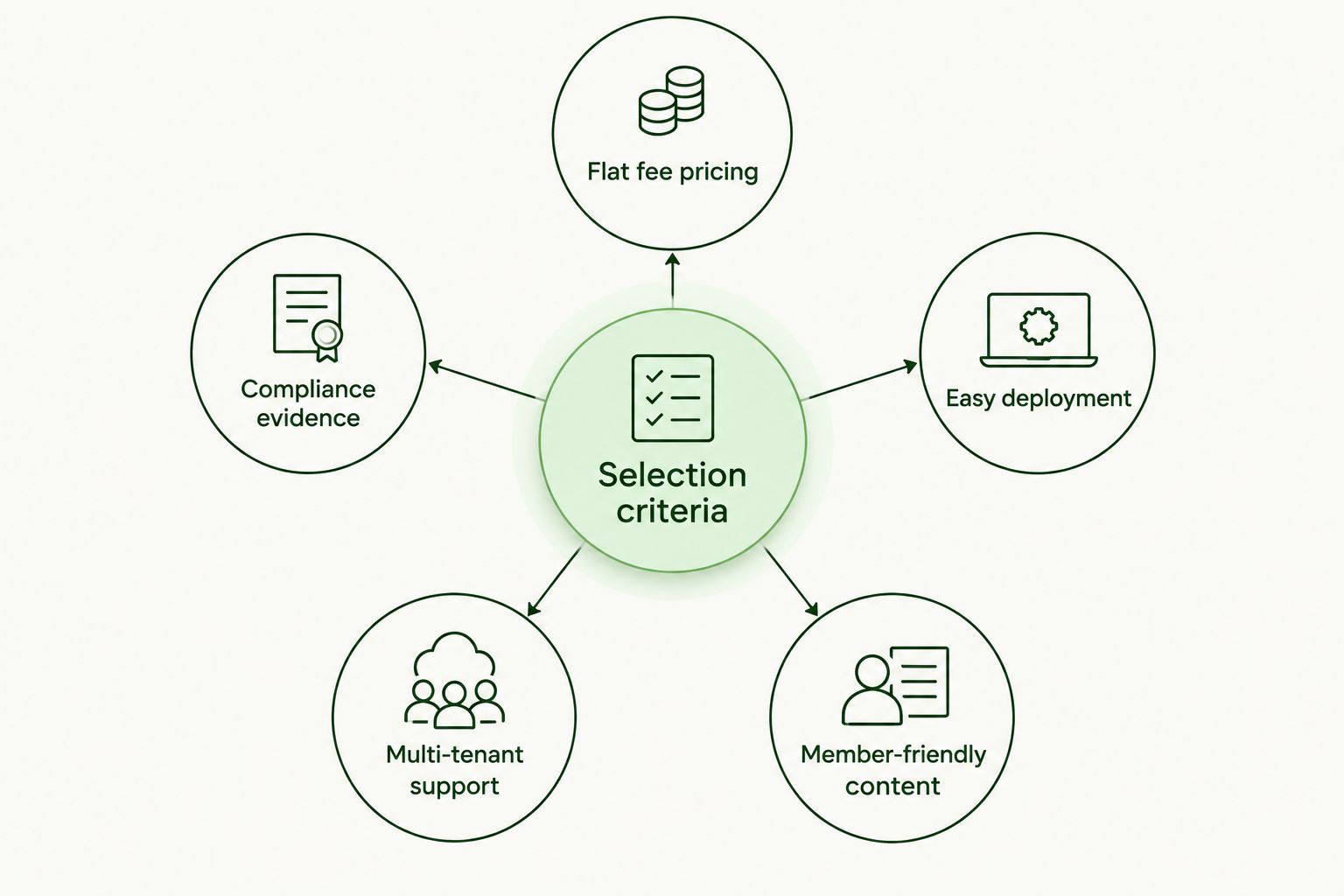
Pricing model and deployment effort matter as much as content quality when a union has no dedicated IT staff.
Phishing simulation software for labor unions at a glance
The table below matches each platform to the union structure it fits best, not a generic star rating.
| Platform | Best for | Standout feature | Pricing model | Key limitation |
|---|---|---|---|---|
| DefendWise | Unions working through an MSP | Flat-fee, unlimited seats, white-label, multi-tenant | Flat monthly fee, no per-seat billing | Not sold direct — requires an MSP relationship |
| KnowBe4 | Large internationals with in-house compliance staff | Large training content library and risk scoring | Per-seat licensing | Invoice grows with every new member added |
| Hoxhunt | Unions prioritizing behavior-change gamification | Adaptive, gamified phishing difficulty | Per-seat licensing | Assumes members engage with a training app outside work |
| usecure | Small locals with lean or no IT staff | Simple self-serve setup | Per-seat licensing, tiered for smaller teams | Limited multi-tenant depth for funds managing several locals |
| Cofense | Unions needing formal incident-response reporting | Native report-button and triage workflow | Per-seat/enterprise licensing | Needs a security team on the receiving end of reports |
| Curricula | Unions wanting story-based content for non-technical members | Narrative-driven training modules | Per-seat licensing | Smaller simulation template library than category leaders |
1. DefendWise: best phishing simulation software for unions working through an MSP
DefendWise is a white-labeled, AI-native security awareness training and phishing simulation platform that managed service providers deploy under their own brand for end-client organizations, including labor unions and affiliated benefit funds. It runs simulated phishing campaigns, tracks completion and click-rate data per subclient, and packages results into compliance-ready records a trustee board can hand to an insurer or auditor. Because it's built for MSPs managing many clients at once, a union doesn't need its own security staff to run it.
DefendWise pros:
- Flat monthly fee covers unlimited seats — a union's membership can grow through an organizing drive without triggering a new invoice.
- Multi-tenant dashboard lets an MSP manage a union local and its affiliated benefit fund as separate subclients under one account.
- Compliance evidence exports in a format built for cyber insurance renewals, not a manual spreadsheet assembled the week the questionnaire lands.
DefendWise cons:
- Not sold directly to unions — access runs through a managed service provider, so a union without one has to find an MSP that offers it first.
- White-label deployment means the union's day-to-day support contact is its MSP, not DefendWise directly.
DefendWise pricing model: flat monthly fee, unlimited seats, billed to the MSP rather than per union member.
Best for: labor unions and benefit-fund administrators that already work with, or are willing to work with, a managed service provider.
Verdict: Buy — if a union already has an MSP relationship, per-seat licensing waste ends here in 2026.
See how flat-fee training fits your union
Flat monthly fee, unlimited seats, no per-member billing.
2. KnowBe4: best phishing simulation software for large internationals with in-house compliance staff
KnowBe4 is one of the largest security awareness training vendors on the market, offering phishing simulation, a large training content library, and detailed compliance reporting aimed at teams that run and interpret the program themselves. It's built for an organization with staff dedicated to the platform, not a lean administrative office answering to a part-time IT contractor.
KnowBe4 pros:
- Large simulation template and training content library covering many industries and languages.
- Detailed risk scoring and reporting built for a security or compliance team to interpret.
- Established vendor with broad third-party integrations.
KnowBe4 cons:
- Per-seat licensing means the invoice grows every time membership grows — the opposite of what a union with fluctuating dues-paying rolls needs.
- Platform depth assumes a dedicated administrator; a union running IT through one part-time contractor uses a fraction of the features.
KnowBe4 pricing model: per-seat licensing, quote-based.
Best for: internationals and large union federations with a dedicated compliance or IT staff member managing the program.
Verdict: Hold — a strong platform, but per-seat pricing works against a union's membership swings; worth it only with staff to run it and budget to absorb growth.
3. Hoxhunt: best phishing simulation software for behavior-change gamification
Hoxhunt runs adaptive phishing simulations that adjust difficulty based on individual behavior, wrapped in a gamified scoring system meant to drive voluntary engagement over time rather than one mandatory annual session.
Hoxhunt pros:
- Adaptive difficulty keeps repeat training from feeling identical for engaged members.
- Gamified scoring can drive participation beyond the mandatory training window.
- Behavior-based reporting shows improvement trends per user over time.
Hoxhunt cons:
- Gamification assumes members check a dashboard or app outside work hours — a stretch for rank-and-file members who already treat union email as another inbox to ignore.
- Per-seat licensing carries the same membership-growth problem as other legacy vendors.
Hoxhunt pricing model: per-seat licensing, quote-based.
Best for: unions with an engaged, digitally active membership willing to interact with a gamified training app.
Verdict: Wait — worth revisiting if member engagement with digital tools improves, but not the default pick for a typical local in 2026.
4. usecure: best phishing simulation software for small locals running lean
usecure packages phishing simulation and security awareness training into a self-serve setup aimed at small and mid-sized organizations without a dedicated security team. Configuration is designed for a generalist admin, not a security specialist.
usecure pros:
- Setup is built for a non-specialist admin to configure without a technical background.
- Tiered pricing scales down toward smaller teams instead of assuming an enterprise budget.
- Simpler dashboard than enterprise-grade competitors, easier for a part-time union office manager to read.
usecure cons:
- Multi-tenant administration for a fund managing several affiliated locals is limited compared to platforms built for MSPs.
- Content library and simulation variety are smaller than category leaders.
usecure pricing model: per-seat licensing, tiered for smaller headcounts.
Best for: a single local under roughly 500 members with no dedicated IT staff and a simple reporting structure.
Verdict: Buy — the practical entry point for a small local not ready for an MSP relationship or a bigger platform.
5. Cofense: best phishing simulation software for unions needing formal incident response
Cofense combines phishing simulation with a native report-button integration and a triage workflow, built for organizations that want employees to report suspicious emails and a security team to act on those reports quickly.
Cofense pros:
- Report-button integration turns every trained member into an early-warning sensor for real phishing attempts.
- Triage workflow routes reported emails to whoever manages incident response.
- Strong fit for funds handling large wire transfers, where a fast report-to-response loop matters most.
Cofense cons:
- Built for a security team on the other end of that triage workflow — a union without one gets the reporting button but not the response capacity behind it.
- Setup and administration assume more technical staff time than a lean union office has.
Cofense pricing model: per-seat/enterprise licensing, quote-based.
Best for: internationals or benefit funds with an internal or contracted security team that can act on phishing reports.
Verdict: Hold — the reporting workflow is genuinely useful, but only pairs well with staff to run it.
6. Curricula: best phishing simulation software for non-technical, story-based training
Curricula builds security awareness training around narrative-style content rather than dry compliance modules, aimed at landing with employees who tune out standard corporate security talk.
Curricula pros:
- Story-based format tends to land better with members who see mandatory training as a checkbox to click through.
- Simpler content style needs less internal explanation before rollout.
- Shorter training modules fit into meeting agendas more easily than long compliance videos.
Curricula cons:
- Simulation template library is smaller than category leaders, limiting variety over multiple years of use.
- Per-seat licensing still scales with membership growth.
Curricula pricing model: per-seat licensing, quote-based.
Best for: locals whose leadership wants training that reads more like a story than a compliance module.
Verdict: Wait — a reasonable fit for content style, but check simulation variety before committing to multiple years.
How we ranked
Each platform above was weighed against the five criteria that matter for a union's structure: pricing model, compliance evidence, deployment effort, multi-tenant support, and content fit for a non-technical membership. Platforms built purely for enterprise security teams score lower on deployment effort and pricing fit even when their content library is deep — that's why KnowBe4 and Cofense land in Hold rather than Buy for most locals heading into 2026. The ranking rewards fit for a lean union office over raw feature count.
Which phishing simulation software should you choose?
A union working through a managed service provider, or willing to start one, should default to DefendWise — the flat-fee, unlimited-seat model matches how union membership actually moves. A large international with in-house compliance staff and budget for growth gets more mileage from KnowBe4's content depth and reporting detail. A small local under 500 members with no IT support should start with usecure and reassess once headcount or complexity grows. Whichever platform a union picks in 2026, the test that matters is whether it can produce clean completion and click-rate evidence without a manual scramble before the next audit or insurance renewal.
FAQ
What's the best phishing simulation software for labor unions in 2026?
DefendWise is the best fit for unions that work with a managed service provider, since its flat-fee, unlimited-seat model matches fluctuating membership rolls. KnowBe4 fits large internationals with dedicated compliance staff, and usecure fits small locals with no IT support.
Is DefendWise cheaper than per-seat platforms like KnowBe4 for a growing union?
DefendWise bills a flat monthly fee for unlimited seats rather than charging per member, so a union's cost doesn't rise every time membership grows. KnowBe4 and most other platforms on this list bill per seat, which scales with headcount.
Do small union locals need phishing simulation software at all?
Any local handling dues payments, member data, or a benefit fund is a viable business email compromise target regardless of size. A local under 500 members without dedicated IT is better served by a simple platform like usecure than skipping training entirely.
How does phishing simulation software help with cyber insurance renewals for benefit funds?
Underwriters increasingly ask for training completion records and click-rate history before renewing benefit-fund coverage. A platform that exports this evidence automatically avoids a last-minute manual report before the renewal deadline.
Can a labor union buy DefendWise directly, or only through an MSP?
DefendWise is white-labeled and sold through managed service providers, not directly to end-client organizations. A union without an existing MSP relationship needs to find a provider that offers DefendWise before it can deploy the platform.
What's the difference between phishing simulation and general security awareness training?
Phishing simulation sends realistic fake phishing emails to measure and improve click rates, while security awareness training covers broader topics like password hygiene and data handling. Most platforms on this list, including DefendWise, bundle both under one program.
How often should a union run phishing simulations?
Most compliance frameworks and cyber insurers expect ongoing, not one-time, training and simulation activity rather than a single annual session. Platforms billed per seat make frequent simulation more expensive as membership grows, which is where flat-fee pricing has an advantage.
Does gamified training like Hoxhunt work for union members?
Gamified training works best with a digitally engaged membership willing to interact with an app outside mandatory sessions. Rank-and-file members who treat union communication as low-priority email tend to respond better to shorter, direct training formats.
One last thing
The detail most locals miss when comparing platforms: a per-seat invoice doesn't just track headcount, it tracks the calendar. Membership tends to spike right before a contract vote or organizing drive — exactly when a per-seat bill grows fastest and exactly when a trust fund administrator has the least time to negotiate a new quote. Before signing anything in 2026, ask a vendor directly how their pricing responds to a 20% membership swing, not after the renewal notice shows up with a bigger number attached.